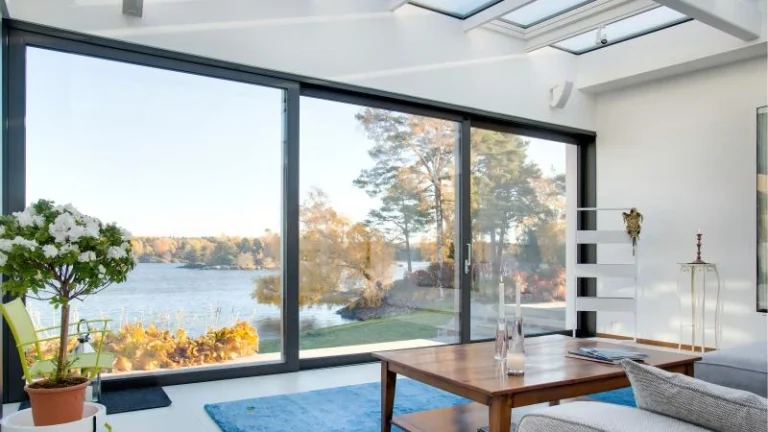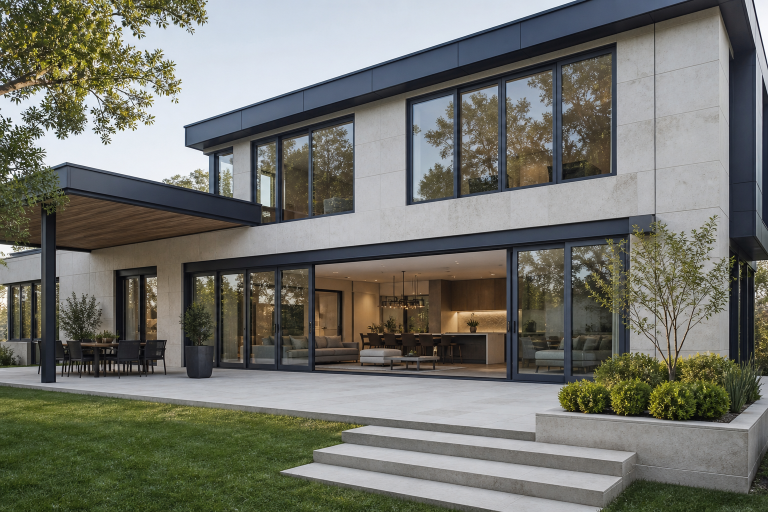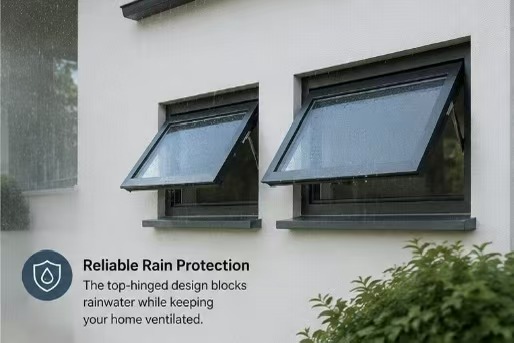
When you compare hurricane or impact windows, you will eventually see numbers such as DP +50/-50, +65/-70, or +85/-90.
For many buyers, these numbers are more confusing than the glass specification itself. Does DP50 mean a window is safe in a 150 mph hurricane? Is DP70 automatically better than DP50? Does an impact-resistant window automatically have a high design-pressure rating?
Not necessarily.
Design Pressure, usually abbreviated as DP, describes the pressure load that a window or door assembly is designed or tested to resist. It is generally expressed in pounds per square foot, or psf.
The key point is that design pressure and impact resistance are related to hurricane performance, but they are not the same thing. Understanding that difference can prevent expensive mistakes when specifying windows for Florida, coastal homes, high-rise buildings, or other high-wind projects.
What Does DP Mean on Impact Windows?
Design Pressure describes the wind pressure acting on a window or door assembly. Wind does not simply push straight against a building.
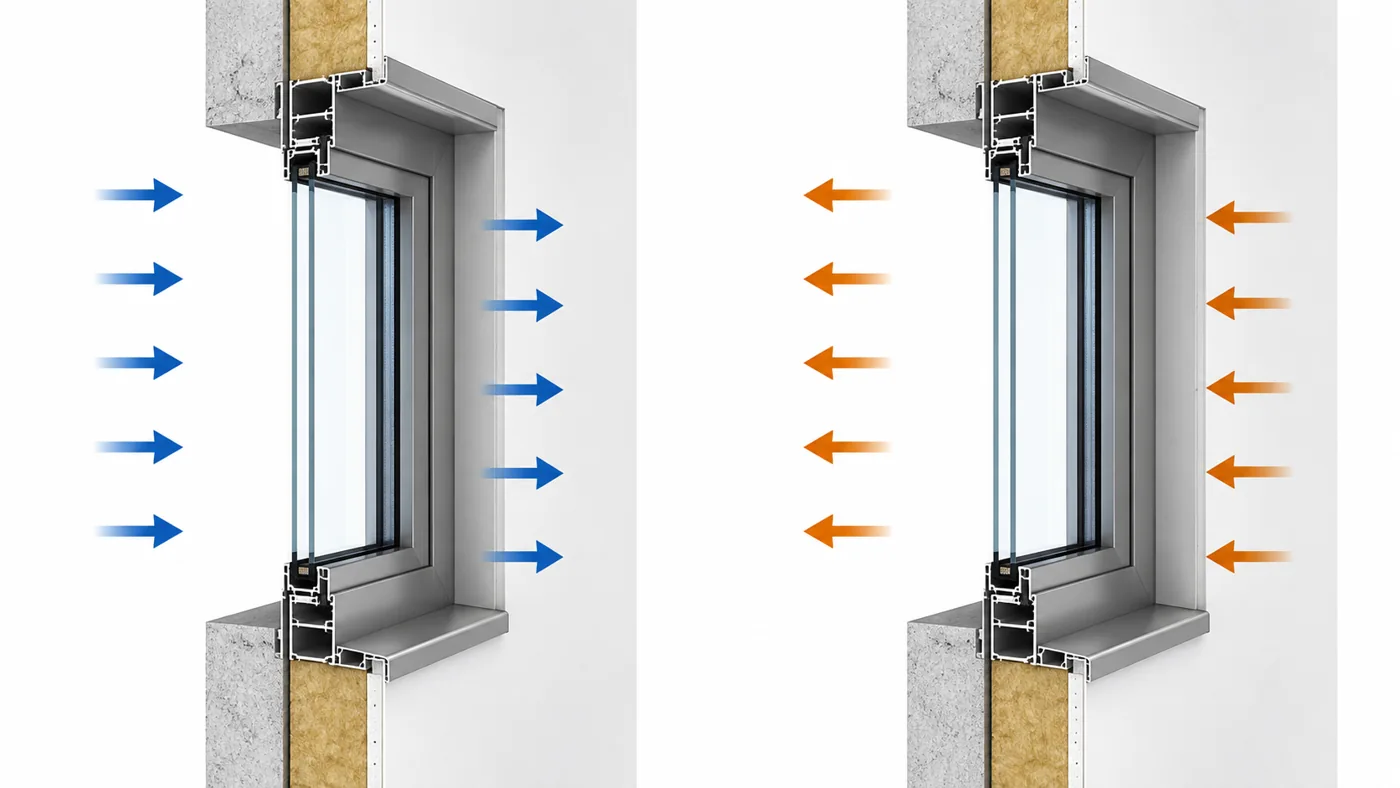
On the windward side, air pushes against the building envelope. This creates positive pressure. As air passes around corners and over the building, it can create suction that pulls windows and doors outward. This creates negative pressure.
That is why product documentation may show a rating such as +50 / -60 psf rather than one single number.
Miami-Dade’s Product Control database specifically allows searches using separate maximum positive and negative design pressures, which illustrates that both values matter when evaluating an approved product.
Positive Design Pressure
Positive pressure represents wind pushing toward the building. Imagine strong hurricane winds striking the exterior surface of a large living-room window. The glass, frame, mullions, glazing system, fasteners and anchors all need to transfer that load safely into the surrounding structure.
Negative Design Pressure
Negative pressure represents suction pulling away from the building. This can be especially important around building corners, roof edges and exposed elevations.
For that reason, negative DP is sometimes higher than positive DP. A product may therefore be listed as +65 / -70 rather than simply “DP65.”
Is DP Rating the Same as Impact Rating?
No. This is one of the most important distinctions when buying hurricane windows. A window can have a relatively strong structural design-pressure rating and still not be an impact-resistant window.
For example, a Florida product evaluation for a non-impact single-hung system lists +50/-60 psf and explicitly states that the product is not impact resistant.
Impact resistance relates to the product’s ability to resist specified wind-borne-debris testing and subsequent pressure cycling. Design pressure relates primarily to structural wind loading.
For hurricane applications, the project may require both: impact resistance + sufficient design pressure. Having only one does not automatically satisfy the other.
Why Window Size Changes the DP Rating
One mistake buyers sometimes make is assuming that every window in the same product series has the same maximum DP. That is not necessarily true.
As a window becomes larger, the glazing area, frame span and loads on structural components change. Florida approval drawings for one impact single-hung system show +50/-60 psf for a 52 1/8 by 62-inch configuration and +50/-50 psf for a 52 1/8 by 71-inch configuration. The exact size and permitted assembly matter.
This means a supplier should not simply say: “This series is DP90.”
What design pressure applies to the exact window size and configuration being quoted?
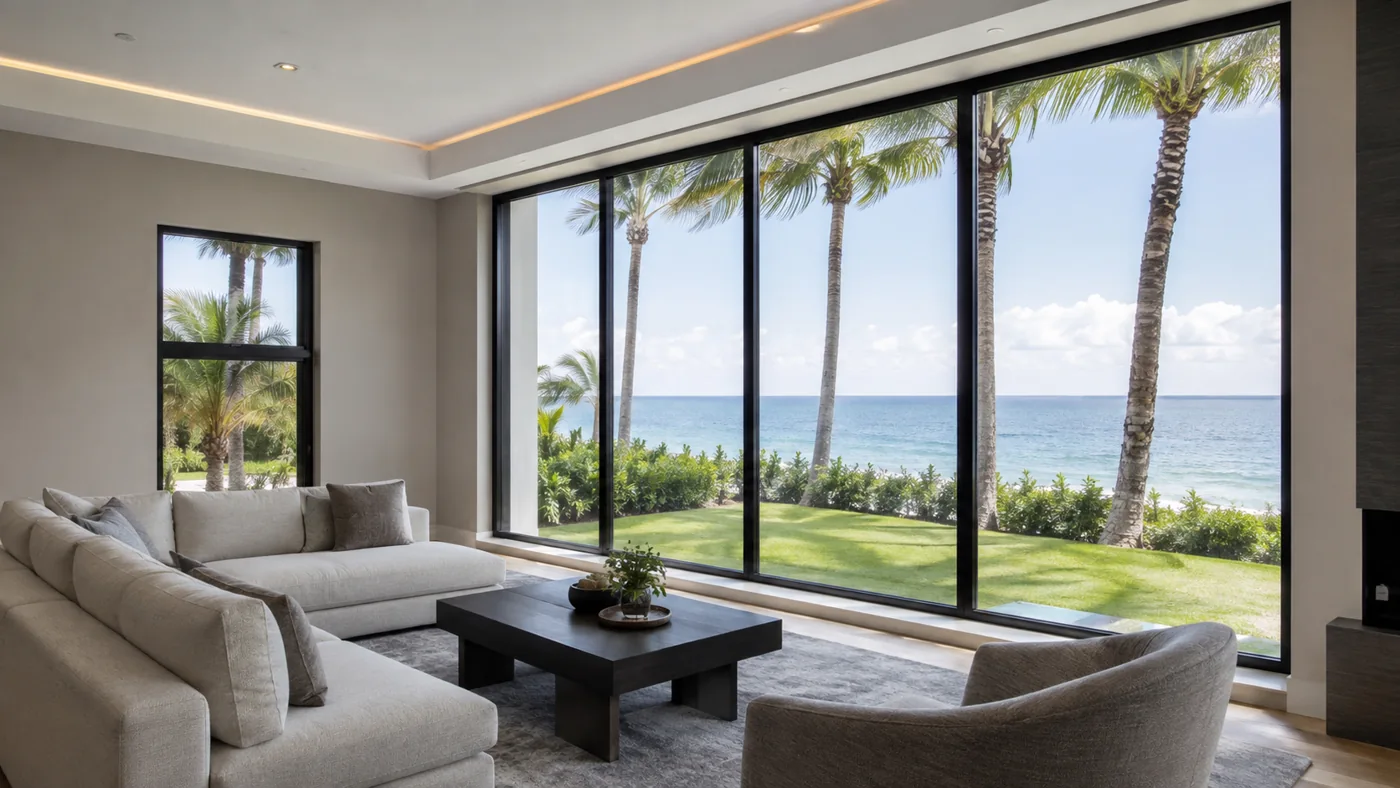
That distinction becomes increasingly important for oversized fixed windows, large sliding doors, floor-to-ceiling glazing, corner windows, upper-story openings and wide folding-door systems.
What DP Rating Do I Need for Impact Windows?
There is no universal DP number that is correct for every Florida house. The required pressure depends on the individual building and opening. Factors can include:
Building Location
Coastal exposure and local design wind conditions can significantly affect the required pressure.
Building Height
Wind loads generally increase as the opening gets higher above the ground. A window on the fifth floor may therefore face different pressure requirements from the same window installed on a ground-floor wall.
Exposure
A house surrounded by dense development does not experience wind in exactly the same way as an exposed waterfront property.
Position on the Building
Openings close to corners can experience greater suction than openings located in the center of a wall.
Window Size
Larger products typically place greater structural demand on glass, frames, reinforcement and anchors.
Building Geometry
Roof shape, wall geometry and other structural factors can influence the calculated pressure.
For these reasons, the correct required design pressure should come from the applicable engineering, architectural or code documentation for the project—not from an online “DP-to-wind-speed” chart.
Does DP50 Mean a 150 MPH Window?
You will often find simplified charts online that convert DP ratings directly into hurricane wind speeds. These can be useful for general education, but they should not be used as the sole basis for product selection.
Wind pressure on an actual building is influenced by much more than headline hurricane wind speed. Location, exposure, building height, building geometry and opening position all matter.
That is why a simple statement such as “DP50 equals 150 mph” can be misleading when used without context.
A better specification approach is:
- Determine the required pressure for the exact opening.
- Identify a product approved or tested for that configuration.
- Verify that its allowable positive and negative pressures meet or exceed the project requirement.
- Confirm the permitted installation method and anchors.
Why Positive and Negative DP May Be Different
Consider an impact window listed at +70 / -85 psf. This means the tested or approved limits are not symmetrical. The outward suction capacity in this example is greater than the inward pressure value.
These numbers are illustrative. Actual approval documents must be checked for the precise size, glazing and installation being supplied.
When comparing quotations, both numbers should therefore be checked. If your project requires +55 / -65, then a product rated +60 / -60 may still be inadequate because the required negative pressure exceeds the product’s allowable negative value. Looking only at the “60” would miss that issue.
DP Rating vs Performance Grade
You may also see another term: PG — Performance Grade.
DP and PG are related, but they should not automatically be treated as identical. Design pressure focuses on structural loading. As FGIA explains, Performance Grade indicates testing at the applicable design pressure together with the other requirements of the standard.
For buyers comparing different manufacturers, always confirm which number the datasheet is actually reporting rather than assuming every “50” or “60” means the same thing.
How Impact Testing Fits Into the Picture
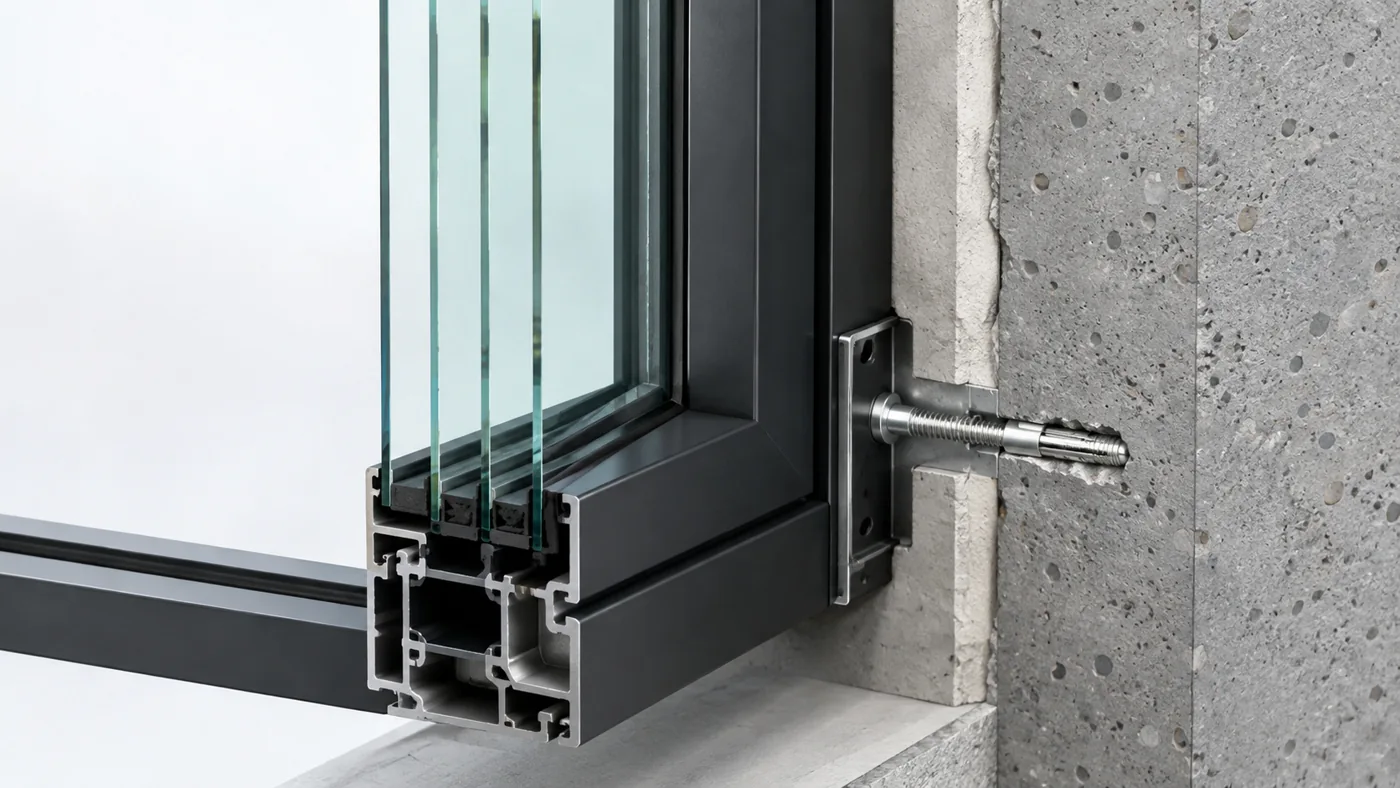
Impact-resistant windows need more than strong frames. The glass, interlayer, glazing retention, frame, hardware and anchoring system work together as an assembly.
Florida’s statewide product-approval system covers categories including windows, exterior doors, shutters and impact protective systems, and applicable product approval must be verified for the proposed use.
Impact-window documentation may reference standards or test protocols such as:
ASTM E1886
Used for performance testing of exterior windows, doors and protective systems impacted by wind-borne debris.
ASTM E1996
Defines impact conditions and missile levels used together with the test methodology.
TAS 201, TAS 202 and TAS 203
These appear in Florida/HVHZ product-approval documentation and address impact, structural pressure and cyclic wind-pressure testing. Florida Product Approval records for HVHZ impact windows commonly list ASTM E1996 and TAS 201/202/203 documentation.
What Should You Check on an Impact-Window Quote?
A quotation should contain more than dimensions and glass thickness. For hurricane-related projects, ask the supplier for the exact product configuration and verify:
1. Window Type
Is it fixed, casement, awning, single hung, sliding or another configuration? Different operating systems can have different allowable sizes and pressures. Compare the exact configurations of aluminum impact awning windows and single hung impact windows, and request the applicable approval documents.
2. Exact Size
Do not rely only on the series name. Ask whether the quoted rating applies to your exact width and height.
3. Positive and Negative Design Pressure
Ask for both values. For example, +65 / -70 psf, not simply “DP70.”
4. Impact Classification
Confirm whether the exact assembly is impact resistant and what testing or approval applies.
5. Glass Build-Up
Ask for the full laminated or insulated laminated glass composition.
6. Frame Configuration
Profile depth, reinforcement and thermal-break design can change between systems.
7. Anchoring Requirements
A high-performance window installed with the wrong anchors or spacing is not the same tested system.
8. Approval Documentation
For Florida projects, confirm the applicable Florida Product Approval or other required approval documentation for the specific location and application.
Miami-Dade maintains an official Product Control database where products can be searched by file, impact rating and maximum positive/negative design pressure.
Why Aluminum Is Common for High-DP Window Systems
Aluminum is frequently used for large or high-performance window assemblies because of its strength-to-weight ratio and dimensional stability. For large glazed openings, structural capacity becomes increasingly important because frame spans and glass loads increase with size.
That does not mean every aluminum window automatically has a high DP rating. Profile geometry, wall thickness, mullions, reinforcement, sash design, glass thickness, hardware, anchors and maximum tested size all influence the finished system.
RUTAO manufactures custom aluminum window and door systems for international projects, including fixed, awning, hung, sliding and folding configurations.
For project-specific impact applications, the appropriate approach is to start with the required opening dimensions and performance values, then match the frame, glass, hardware and anchoring configuration to those requirements.
A Practical Example
Suppose a project has three openings:
| Opening | Required Pressure |
|---|---|
| Living-room fixed window | +55/-65 psf |
| Bedroom window | +45/-50 psf |
| Second-floor corner window | +60/-75 psf |
It would be incorrect to automatically specify one generic DP50 window for every location. The living-room opening needs at least the required positive and negative capacity. The bedroom may accept a lower-rated product if permitted by the approved system. The corner opening has the most demanding negative load and may require a stronger configuration.
This is why custom hurricane-window projects should be selected opening by opening rather than simply ordering one “hurricane window specification” for the entire house.
Current Florida Code Note for 2026
As of September 2026, Florida’s official Building Commission website identifies the 8th Edition (2023) Florida Building Code as effective from December 31, 2023.
The state is simultaneously developing the 9th Edition (2026), with official planning documents targeting December 31, 2026 for its effective date.
For projects being designed or permitted around the transition, confirm which edition applies with the appropriate building professional or permitting authority rather than assuming the newest published material is already enforceable.
Final Takeaway
The most important thing to remember about impact window design pressure is simple: DP is not just a marketing number.
It is connected to a particular product configuration, size, pressure direction and installation condition. And DP alone does not prove that a window is impact resistant.
Before buying hurricane windows, verify: required project pressure → exact product size → positive/negative DP → impact approval → glass configuration → installation method.
That process provides a far more reliable comparison than choosing a window simply because the brochure says “hurricane rated.”
Need Custom Aluminum Windows for a High-Wind Project?
RUTAO manufactures custom aluminum windows and doors for residential and commercial projects.
Send us your opening dimensions, project location, required positive/negative design pressure, glass specification, finish, hardware requirements and architectural drawings. Our team can use those requirements to help define an appropriate frame, glazing and hardware configuration.
Any Florida, Miami-Dade, HVHZ, TDI, NFRC or other certification claim should only be made when it has been verified against the exact RUTAO product series and configuration being supplied.
Frequently Asked Questions
What does DP mean on impact windows?
DP means design pressure, usually expressed in pounds per square foot. It describes the wind pressure capacity associated with a specific window assembly, size and installation.
Is a high DP rating proof of impact resistance?
No. Structural pressure capacity and resistance to wind-borne debris are separate requirements. Check both the positive and negative pressure ratings and the impact approval for the exact assembly.
What DP rating do I need for a Florida home?
There is no single rating for every home. The required pressure depends on the location, height, exposure, building geometry and opening. Use the project-specific requirements established by the responsible design professional.
Can DP50 be converted directly to a hurricane wind speed?
A simple conversion is not sufficient for product selection. Actual window loads also depend on exposure, building height, geometry and opening position. Compare approved pressure capacities with the pressures required for the opening.
Why can larger windows have different DP ratings?
Changing width and height changes glass spans, frame demands and loads on connections. Check the approval tables for the exact size and configuration rather than relying on the highest rating advertised for the series.
Do installation anchors affect design pressure performance?
Yes. The approved performance depends on the complete assembly and permitted installation, including substrate, anchors, spacing and edge distances. Follow the applicable approval drawings and project documentation.