What You Need to Know About Aluminum Entry Door Security for Modern Homes
When homeowners ask “are aluminum doors safe?”, the concern usually comes from outdated impressions. Many people still associate aluminum doors with thin metal sheets or lightweight interior partitions. In reality, modern aluminum entry doors are engineered systems designed for strength, security, and long-term durability.
Yes, aluminum entry doors can be very secure when the right profile design, locking hardware, glazing configuration, and professional installation are combined. In this guide, we break down common myths about aluminum entry door security, explain what actually makes a door safe, and show how high-quality aluminum doors can meet or exceed modern home security expectations.
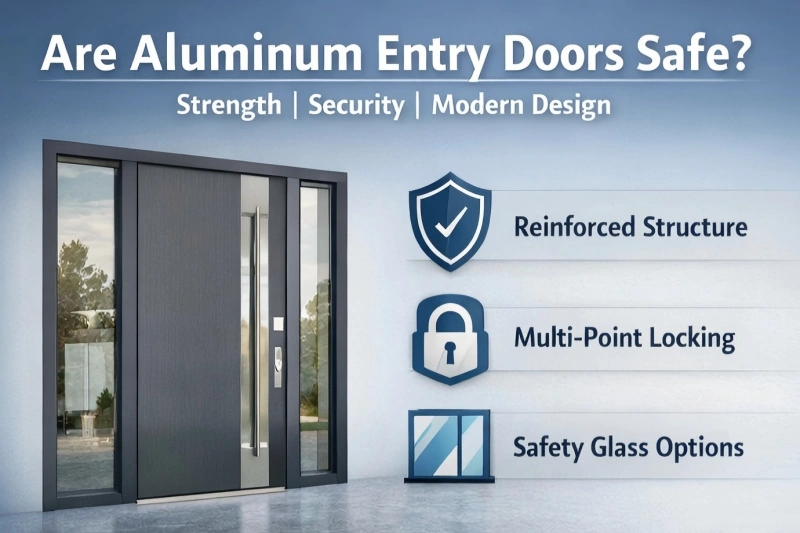
Are Aluminum Doors Really Safe?
At first glance, aluminum may feel “light” compared to steel or solid wood. However, lightweight does not mean weak. Aluminum has one of the highest strength-to-weight ratios among construction materials and is widely used in high-performance architectural systems, commercial buildings, and even aerospace applications.
The real answer to are aluminum doors safe is this:
The security of an aluminum entry door depends on its system design, hardware configuration, glazing choice, and installation quality — not simply the material itself.
A poorly designed steel or wood door can be insecure, while a properly engineered aluminum entry door can deliver excellent resistance to forced entry, impact, and long-term deformation.
Common Security Myths About Aluminum Entry Doors
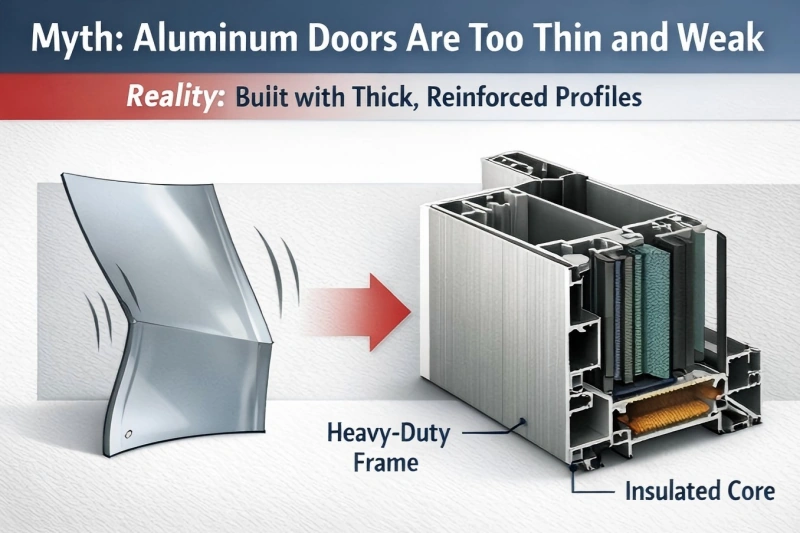
Myth 1: Aluminum Doors Are Too Thin and Easy to Break
This is one of the most common misconceptions. Many consumers imagine aluminum doors as thin sheets that bend or dent easily.
The reality:
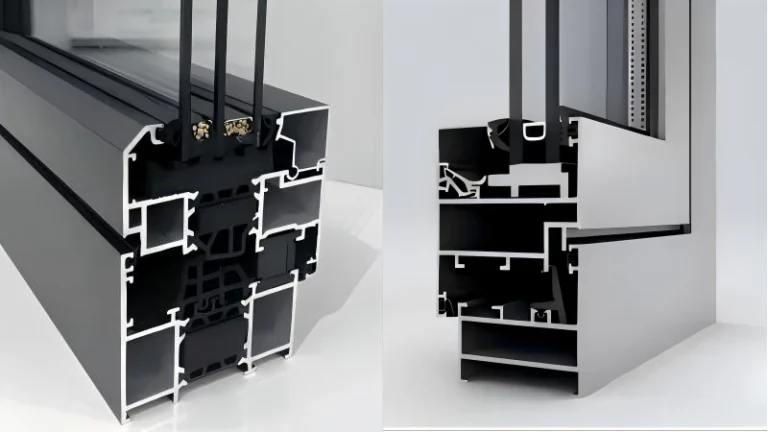
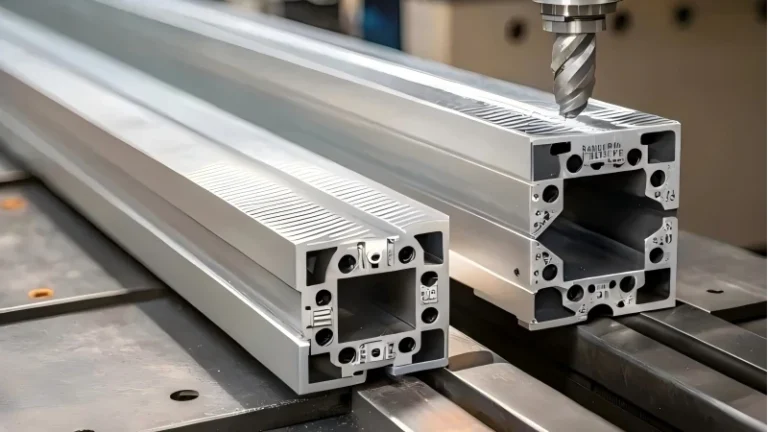
High-quality aluminum entry doors use architectural-grade aluminum profiles with multi-chamber (hollow) structures, reinforced corners, and sufficient wall thickness. These profiles are engineered to resist bending, twisting, and impact far beyond what a flat aluminum panel could achieve.
In many modern systems, aluminum doors also include:
-
Internal reinforcement zones
-
Thermal break structures that add rigidity
-
Composite or insulated cores that increase overall strength
As a result, the structural performance of a well-designed aluminum entry door is significantly stronger than most people expect.
Myth 2: Aluminum Entry Doors Are Weaker Than Steel or Solid Wood
Steel doors are often assumed to be the “most secure,” while solid wood doors are viewed as heavy and strong.
However, weight alone does not equal security.
-
Steel doors can be prone to corrosion, especially in coastal or humid environments. Rust over time can weaken door edges, hinges, and lock areas.
-
Solid wood doors are sensitive to moisture and temperature changes. Warping, swelling, or cracking can reduce lock alignment and compromise long-term aluminum entry door security comparisons.
High-quality aluminum doors, by contrast:
-
Do not rust
-
Do not warp or crack
-
Maintain dimensional stability over time
When paired with multi-point locking systems and reinforced frames, aluminum entry doors can deliver security performance comparable to or even more consistent than steel or wood doors over the long term.

Myth 3: Large Glass Panels Make Aluminum Doors Unsafe
Many homeowners worry that glass panels mean an intruder can simply “kick through” the door.
This fear is based on outdated glass technology.
Modern aluminum entry doors use safety glazing, such as:
-
Tempered glass
-
Laminated glass
-
Tempered + laminated composite glass
Laminated safety glass, in particular, is designed so that even when broken, the glass remains bonded to an interlayer, making it extremely difficult to penetrate quickly. This significantly increases the time and effort required for forced entry.
When properly specified, a glazed aluminum entry door can be both secure and visually open, offering daylight without sacrificing safety.
Myth 4: Aluminum Doors Can Be Easily Kicked In
In most forced-entry cases, the weak point is not the door panel, but the lock, strike plate, or door frame anchoring.
A properly configured aluminum entry door system addresses these issues through:
-
Reinforced strike plates
-
Longer fixing screws that anchor deep into the wall structure
-
Multi-point locks that distribute force across the entire door height
With these features in place, kicking in a modern aluminum entry door becomes extremely difficult.
The Facts: What Makes an Aluminum Entry Door Secure?
1. Structural Strength and Door Construction
The foundation of aluminum entry door security starts with the profile design.
Key factors include:
-
Aluminum wall thickness
-
Multi-chamber profile geometry
-
Reinforced lock and hinge zones
-
Internal steel or composite reinforcements (optional by system)
Well-engineered aluminum door systems are often tested for:
-
Structural load resistance
-
Wind pressure performance
-
Impact resistance
These tests demonstrate that modern aluminum entry doors are designed to withstand real-world forces, not just look good.
2. Advanced Locking Systems and Hardware
The locking system is the heart of aluminum entry door security.
Multi-point locking systems are now standard for high-quality aluminum doors. Instead of relying on a single latch, the door locks at multiple points along the frame, making it much harder to pry or force open.
Important hardware elements include:
-
High-security lock bodies
-
European-standard lock cylinders
-
Reinforced hinges or concealed hinges
-
Heavy-duty strike plates secured with long fixing screws
Together, these components transform the aluminum door into a fully integrated security system.
3. Secure Glass and Glazing Options
For doors with glass panels, glazing choice is critical.
Common security glazing options include:
-
Tempered glass: Strong impact resistance, safe breakage pattern
-
Laminated glass: Holds together after breakage, delays intrusion
-
Composite glazing: Combines safety, sound insulation, and energy efficiency
A safe aluminum entry door with glass depends on the correct glazing configuration as much as the frame itself.
4. Fire, Weather, and Corrosion Resistance
Security is not only about burglary resistance — it’s also about protection over time.
Aluminum entry doors offer important safety advantages:
-
Non-combustible material: Aluminum does not burn and maintains structural integrity longer than wood in fire conditions
-
Excellent weather resistance: Powder coating or fluorocarbon finishes protect against UV, rain, and temperature extremes
-
Corrosion resistance: Ideal for coastal or high-humidity regions
These properties help aluminum doors maintain their security performance for decades.
5. Professional Installation and Framing
Even the best aluminum entry door can fail if installed incorrectly.
Proper installation ensures:
-
The frame is securely anchored to the wall structure
-
Lock points align precisely with strike plates
-
Door clearances are correctly adjusted
-
Weather seals function as intended
For homeowners asking are aluminum doors safe for my home, installation quality is just as important as the product itself.
How to Choose a Safe Aluminum Entry Door
Key Features to Look For
When evaluating aluminum entry door security, check for the following:
-
Certified aluminum profiles with adequate wall thickness
-
Multi-point locking system with high-security cylinder
-
Reinforced hinges and strike plates
-
Tempered or laminated safety glass for glazed doors
-
Durable weather seals and well-designed thresholds
-
Test reports or compliance with local building standards
Questions to Ask Your Door Supplier
Before purchasing, ask your supplier:
-
“How is this aluminum entry door reinforced against forced entry?”
-
“What glazing options improve aluminum entry door security?”
-
“Has this door system passed structural or impact tests?”
-
“Do you provide professional installation and technical support?”
Clear answers to these questions often separate high-quality suppliers from basic product sellers.
Why Choose Rutao Aluminum Entry Doors
Rutao’s Approach to Security and Design
Rutao focuses on aluminum door and window systems that balance security, durability, and modern aesthetics. Rather than relying on a single feature, Rutao designs aluminum entry doors as complete systems:
-
Custom aluminum profiles engineered for strength
-
Multi-point locking hardware matched to door size and use
-
Optional safety glazing solutions
-
Configurations tailored to North American and European market requirements
This system-based approach ensures that aluminum entry door security is built into the design from the beginning.
From Design to Installation: One-Stop Solution
Beyond manufacturing, Rutao supports overseas customers with:
-
Product selection and technical consultation
-
Custom configuration for residential and commercial projects
-
Quality control and export-ready packaging
-
Coordination with professional installation standards
The goal is simple: help customers achieve aluminum entry doors that are safe, durable, and visually aligned with modern architecture.
Final Thoughts: Are Aluminum Doors Safe?
The answer is clear: yes, aluminum entry doors are safe when properly designed and installed.
Most concerns about aluminum door security come from outdated assumptions rather than modern engineering realities. With reinforced structures, advanced locking systems, safety glazing, and professional installation, aluminum entry doors are a reliable and secure choice for today’s homes.
If you are still asking “are aluminum doors safe for my home?”, Rutao’s team is ready to provide expert guidance and tailored solutions for your project.
Contact Rutao to explore secure aluminum entry door options designed for modern living.
Frequently Asked Questions About Aluminum Entry Door Security
Are aluminum entry doors safe?
Yes. Aluminum entry doors can be very safe when they are properly designed and installed. Modern systems use reinforced aluminum profiles, multi-point locking hardware, and secure glazing to provide strong protection against forced entry.Smart Aluminium Security Doors
Why do some people think aluminum doors are not secure?
This idea usually comes from confusing architectural aluminum doors with thin aluminum sheets or interior partitions. In reality, building-grade aluminum entry doors are engineered with structural profiles and professional hardware that offer much higher strength and stability.Customized Aluminum Pivot Doors
Are aluminum entry doors weaker than steel or solid wood doors?
Not necessarily. Steel doors can rust over time, and solid wood doors may warp or crack due to moisture and temperature changes. High-quality aluminum entry doors stay dimensionally stable and can deliver comparable aluminum entry door security when equipped with proper locking systems.Full Aluminium Door
Is an aluminum entry door with glass safe?
Yes. An aluminum entry door with glass can be secure when using tempered or laminated safety glass. Laminated glass remains bonded after breaking, which helps slow down intrusion and improves overall security.Wide Aluminium Doors
What locking system is best for aluminum entry door security?
Multi-point locking systems are the best choice for aluminum entry doors. They secure the door at several points along the frame, making it much harder to pry open compared to traditional single-point locks.Aluminum Entry Doors Residential
Can aluminum entry doors be kicked in easily?
A well-configured aluminum entry door is difficult to kick in. Security depends more on reinforced strike plates, long fixing screws anchored into the wall, a solid frame structure, and correct installation than on the door material itself.Aluminium Front Doors
What should I look for when choosing a safe aluminum entry door?
Look for certified aluminum profiles with sufficient wall thickness, a multi-point locking system, reinforced hinges, safety glass for glazed doors, and professional installation that follows local building standards.Black Aluminum Door With Tempered Glass Panels
If you’re unsure which aluminum entry door configuration is right for your project, Rutao’s team can provide professional guidance.