
Aluminum alloy windows have become a mainstream choice in modern homes and commercial buildings because of their strength, durability, sound insulation, and sleek appearance. When planning a project, most homeowners do not struggle with the material choice, but with the different aluminum window opening methods available for each room. Choosing the right opening style affects ventilation, safety, sealing performance, and everyday comfort.
This guide introduces five common aluminum window opening methods, explains their advantages and disadvantages, and gives practical tips on how to choose the best option for your space.
What are aluminum window opening methods?
“Aluminum window opening methods” describes the way an aluminum window sash opens and closes, including its direction, angle, and hardware structure. Different opening styles change how much fresh air can enter, how safe a window is for families with children, how easy it is to clean, and how well it blocks noise and rain.
The most common aluminum window opening methods used in homes and offices today are sliding windows, casement windows, top-hung windows, tilt and turn windows, and fixed windows. Together, they can cover most scenarios from small bathrooms to large living rooms and panoramic landscape glazing.

1. Sliding aluminum windows
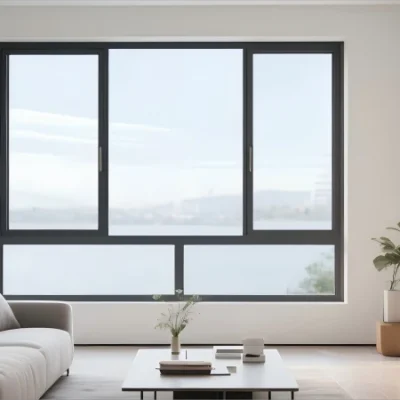
Sliding aluminum windows open and close by moving the sash horizontally along a track. This popular aluminum window opening method is widely used in balconies, kitchens, and narrow spaces where every centimeter of indoor space matters.
Advantages of sliding windows
Easy to operate for daily use, suitable for families with children or elderly occupants.
Do not occupy indoor space when opened, which helps keep the interior layout flexible.
Large glass area provides excellent natural light and a wide external view.
Disadvantages of sliding windows
Sealing performance is usually weaker than well-installed casement systems and depends heavily on the quality of tracks and weatherstrips.
The window cannot be fully opened, so natural ventilation may be less effective compared with casement designs.
Sliding aluminum windows are ideal for medium and small spaces, such as balconies, kitchens, and rooms facing corridors. By selecting high‑quality tracks and sealing strips, you can significantly improve sealing, sound insulation, and long‑term durability.
2. Casement aluminum windows (inward and outward)
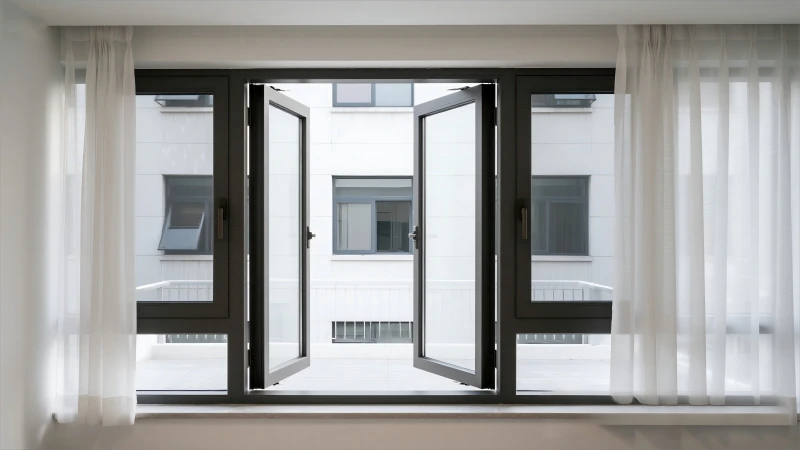
Casement aluminum windows open by rotating around side hinges and can be designed to open inward or outward. This classic aluminum window opening method is widely used in bedrooms, studies, and rooms that need quiet and strong sealing.
Advantages of casement windows
Excellent ventilation because the entire sash can open outward or inward to catch the breeze.
Strong sealing, windproof performance, and good waterproof results when paired with quality hardware and seals.
Long service life thanks to a relatively simple mechanical structure and fewer sliding parts.
Disadvantages of casement windows
Inward-opening casement windows occupy indoor space when opened, which may interfere with curtains or furniture.
Outward-opening casement windows are more affected by strong wind and require reliable hinges and safety limiters.
Casement aluminum windows are recommended for bedrooms, study rooms, and any space that requires good sound insulation, energy efficiency, and comfortable airflow. During installation, make sure the hinges, locks, and seals are properly aligned and securely fixed.

3. Top-hung aluminum windows
Top-hung aluminum windows are hinged at the top and open outward or inward from the bottom, leaving a gap that allows air in while keeping most rain out. This aluminum window opening method is usually used in small rooms and high positions where safety and rain protection matter.
Advantages of top-hung windows
Helps prevent rainwater from entering, so you can keep the window open for ventilation even during light rain.
Safer when ventilating, because the opening is small and high, reducing the risk of accidents for children and pets.
Space-saving design that does not interfere much with interior furniture or movement.
Disadvantages of top-hung windows
Restricted external view because the opening angle is limited and the sash often sits higher on the wall.
Limited opening width results in weaker ventilation compared with fully opening casement designs.
Top-hung aluminum windows are suitable for bathrooms, corridors, stairwells, and other compact or high-level spaces. They are also often combined with other window types to provide both ventilation and safety.
4. Tilt and turn aluminum windows
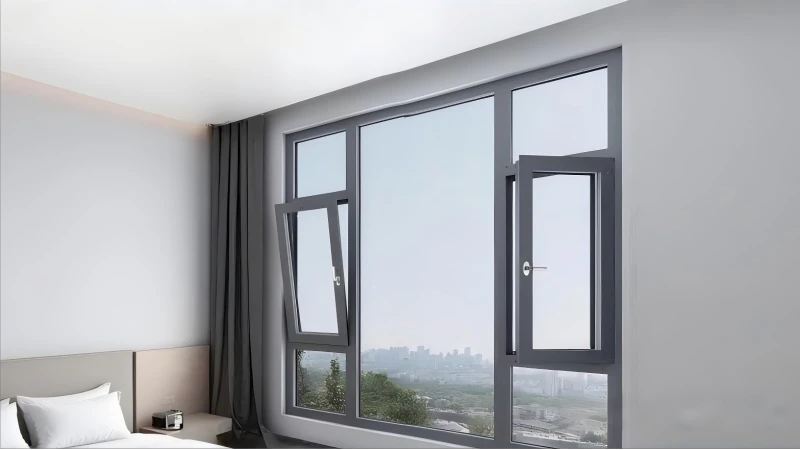
Tilt and turn aluminum windows combine two opening modes in one frame: the sash can tilt inward at the top for safe ventilation, or turn inward like a standard casement for full opening. This versatile aluminum window opening method is especially popular in modern apartments and high‑end residential projects.
Advantages of tilt and turn windows
Dual opening modes: the sash can be fully opened for maximum ventilation or tilted at a small angle for continuous air exchange without strong drafts.
Tilt mode improves safety by reducing the risk of children falling and makes it difficult for intruders to access from the outside.
Inward opening makes it easy to clean the exterior glass from inside the room, which is convenient for high floors.
Disadvantages of tilt and turn windows
Higher cost compared with basic sliding or simple casement designs due to the complex multi-point hardware system.
Higher requirements for installation precision and hardware quality to ensure stable performance and long service life.
Tilt and turn aluminum windows are an excellent choice for rooms with high requirements for comfort, safety, and energy efficiency, such as master bedrooms, children’s rooms, and premium living spaces.
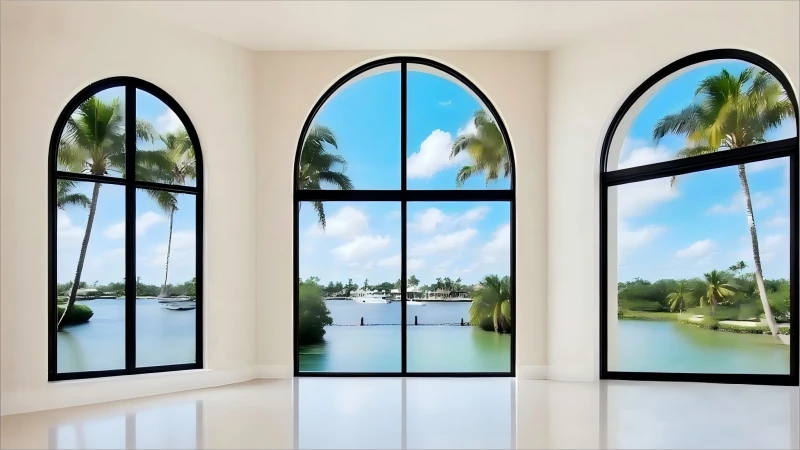
5. Fixed aluminum windows
Fixed aluminum windows cannot be opened. They are designed purely for natural lighting and creating wide, unobstructed views. This aluminum window opening method is often used together with other operable windows in a single facade.
Advantages of fixed windows
Very good sealing performance because there are no movable parts or gaps for air leakage.
Large glazing area offers maximum natural light and generous outdoor views.
Simple structure and fewer hardware components help reduce costs and maintenance.
Disadvantages of fixed windows
No ventilation function, so they must be combined with other opening window types in the same room.
Single function; they cannot provide emergency escape or direct airflow.
Fixed aluminum windows work best as floor-to-ceiling windows, landscape windows, or large picture windows. For comfortable living, they should be paired with operable aluminum window opening methods, such as casement or tilt and turn windows, in the same space.
How to choose the right aluminum window opening method
Selecting the best aluminum window opening method for a project requires balancing room size, ventilation needs, safety, budget, and interior design style. Below are some practical guidelines:
Space size
Small rooms or narrow spaces: sliding or top-hung aluminum windows help save indoor space.
Large living rooms and open-plan areas: casement, tilt and turn, or a combination of fixed plus operable windows create better views and airflow.
Ventilation requirements
High ventilation demand (bedrooms, living rooms): choose casement or tilt and turn windows that can open wide.
Basic ventilation (bathrooms, stairwells, corridors): top-hung windows provide safe, continuous airflow with good rain protection.
Safety and user profile
Homes with children or elderly residents: tilt and turn windows in tilt mode or small top-hung windows are safer, reducing fall risks.
High-rise buildings: prefer inward-opening styles that are easier to clean and maintain from the inside.
Budget and maintenance
Entry-level budgets: sliding windows and standard casement windows are more affordable and easy to maintain.
Higher-end projects: tilt and turn systems and large fixed windows deliver a modern look, better performance, and higher comfort.
Decorative style and view
Modern minimalist design: large fixed windows or narrow-frame casement designs highlight clean lines and panoramic views.
Traditional or classic style: casement windows with divided lights or grille designs suit more traditional facades.
By matching aluminum window opening methods to each room’s function and user habits, you can greatly improve daily comfort, energy efficiency, and overall aesthetics.
Get customized aluminum window solutions from Rutao
Every home and project is different, and the best aluminum window opening method often depends on the building layout, climate, and lifestyle of the people who live there. Rutao provides customized aluminum alloy door and window solutions, combining professional design with reliable hardware and manufacturing.
If you would like tailored advice on aluminum window opening methods, or need to compare prices and performance for different window types, you can contact Rutao for a one‑to‑one consultation. Our team will help you choose the most suitable aluminum window configuration for your balcony, bedroom, living room, or commercial project, and deliver a safe, durable, and visually appealing result.