As winter sets in, many homeowners notice their heating bills climbing faster than expected. While insulation upgrades often focus on attics, walls, or windows, one major source of heat loss is frequently overlooked: the front door.
A front door that isn’t properly sealed or insulated can allow cold air to seep in and warm air to escape all winter long. Even small gaps can make your heating system work harder than necessary. In this guide, we’ll explain how to insulate front door for winter, using practical steps that range from quick DIY fixes to long-term solutions. Done correctly, these improvements can help reduce heat loss and lower heating costs by as much as 30%.
Table of Contents
Why Front Door Insulation Matters in Winter
The front door is one of the most frequently used openings in a home. Unlike walls or fixed windows, it is constantly opened, closed, and exposed to temperature changes. Over time, seals wear down, frames shift slightly, and small gaps form—creating ideal paths for heat loss.
According to the U.S. Department of Energy, poorly sealed doors can significantly increase energy loss due to air infiltration. Proper sealing and insulation help stabilize indoor temperatures and reduce the strain on your heating system.
Understanding how to insulate front door for winter is one of the simplest and most cost-effective ways to improve comfort during cold months.
How Heat Escapes Through a Front Door
Before choosing solutions, it helps to understand where problems usually occur.
Common Heat Loss Areas
Heat typically escapes through:
Gaps between the door and the frame
Worn or compressed weatherstripping
The space under the door at the threshold
Thin or hollow door panels with little insulation
Glass inserts or sidelights without thermal protection
Even newer doors can lose efficiency if installation or sealing is not done correctly.
How to Check Your Front Door for Drafts
Visual Inspection
Start with a close look at your door:
Check for visible gaps along the sides and top
Inspect weatherstripping for cracks, flattening, or missing sections
Look at the threshold to see if the door sits evenly
Examine glass inserts and sealant for signs of failure
Simple DIY Draft Tests
You can also test for air leaks using basic household methods:
Smoke test: Hold a lit incense stick or candle near door edges and watch for movement
Hand test: On a cold or windy day, feel around the frame for drafts
Flashlight test: At night, shine a flashlight from outside and look for light coming through
These tests quickly show where insulation efforts will be most effective.
How to Insulate Front Door for Winter: DIY Solutions
Many effective insulation upgrades are affordable and can be completed in just a few hours.
Replace or Upgrade Weatherstripping
Weatherstripping is one of the most important components of door insulation.
Common options include:
Foam tape (low cost, shorter lifespan)
Rubber or vinyl strips (durable and flexible)
Silicone weatherstripping (excellent for cold climates)
Magnetic weatherstripping (ideal for metal doors and tight seals)
For winter conditions, rubber, silicone, or magnetic weatherstripping generally performs best.
Installation tips:
Clean surfaces thoroughly before applying
Measure carefully to avoid gaps
Make sure the door closes firmly but smoothly
Proper weatherstripping alone can noticeably reduce drafts.
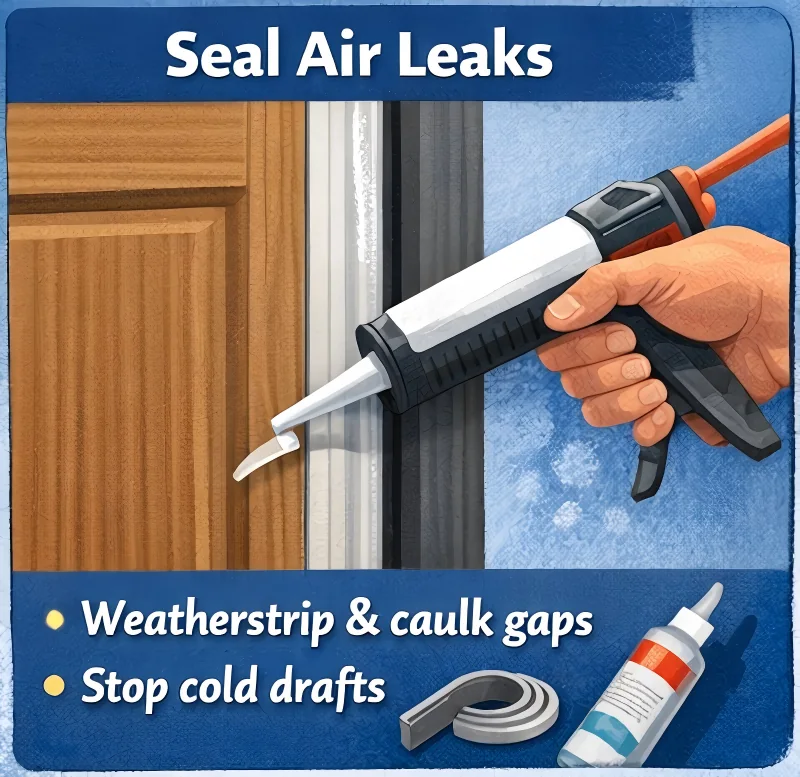
Seal Gaps with Caulk and Foam
Small cracks around the door frame can leak surprising amounts of heat.
Use exterior-grade caulk for narrow gaps around trim
Apply low-expansion spray foam for larger hidden gaps
Be careful not to overfill, as excess foam can distort the frame. Once sealed, these areas significantly improve thermal performance.
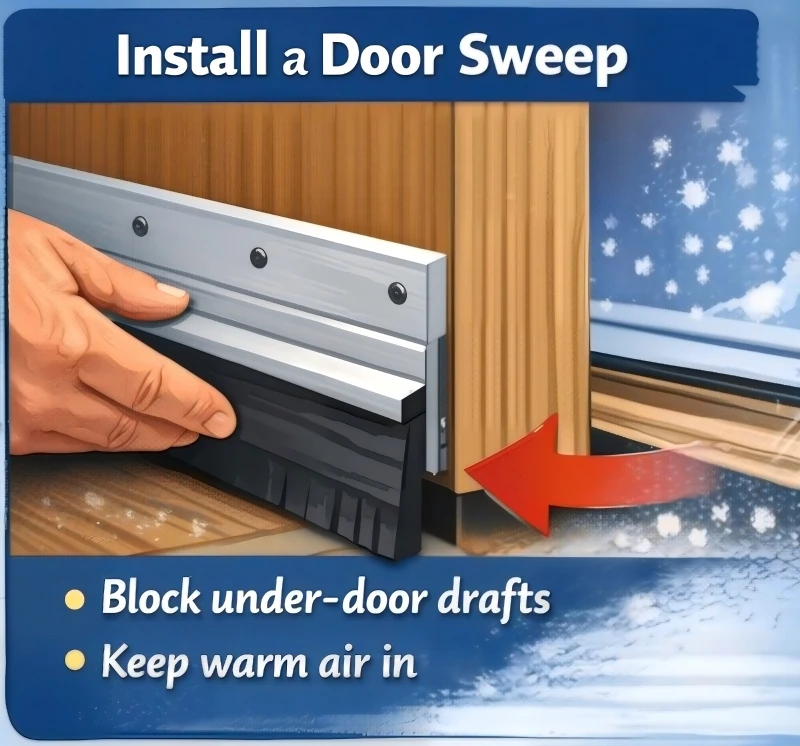
Install a Door Sweep or Draft Blocker
The gap beneath the door is often the biggest source of cold air infiltration.
Effective solutions include:
Adjustable door sweeps
Brush-style sweeps for uneven floors
Temporary fabric draft stoppers (great for renters)
A properly installed door sweep blocks cold air without interfering with normal door operation.
Improving Insulation of the Door Panel
Even with good sealing, some doors simply don’t insulate well.
Use Thermal Door Curtains or Covers
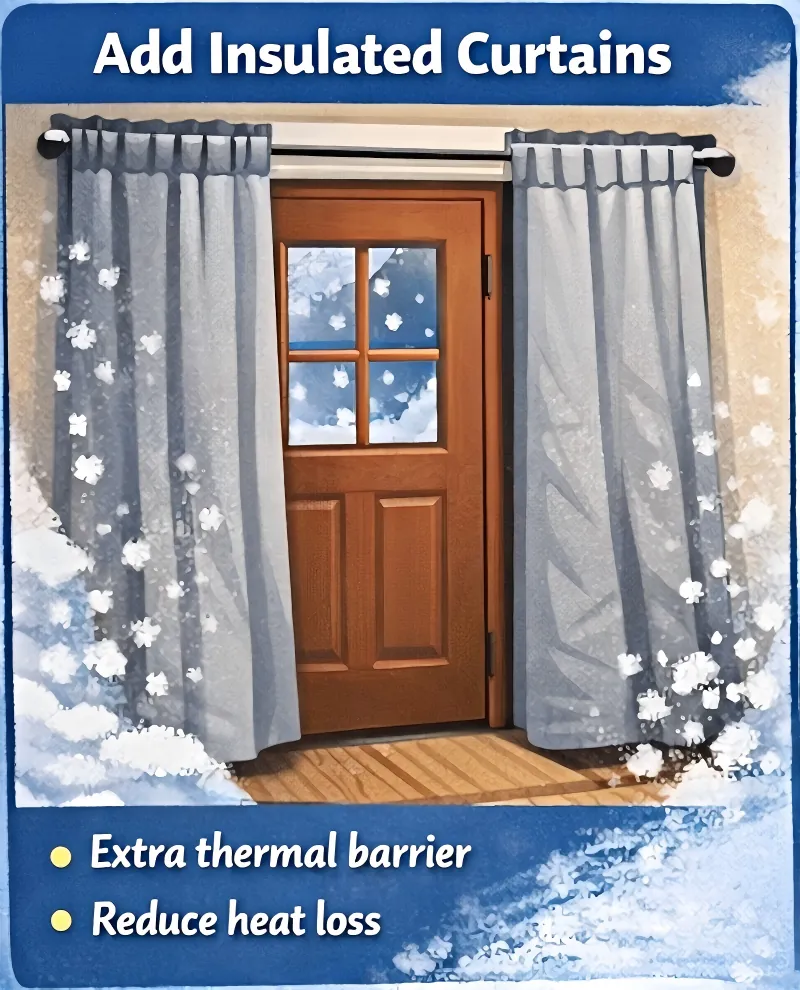
Insulated door curtains add an extra thermal barrier.
Especially useful for north-facing or rarely used doors
Helps reduce heat transfer through thin panels
Available in designs that blend with interior décor
While not a permanent fix, they can make a noticeable difference during extreme cold.
Insulate Glass Inserts and Sidelights
Glass areas are common weak points in door insulation.
Effective winter solutions include:
Clear window insulation film kits
Temporary acrylic panels
Magnetic removable glazing
These methods reduce heat loss while maintaining natural light, and they are easy to remove when winter ends.
When DIY Fixes Aren’t Enough
Sometimes sealing and add-on insulation can only go so far.
Limitations of Older Doors
Older doors often suffer from:
Poor or nonexistent insulation cores
Warping that creates permanent gaps
Loose frames or outdated thresholds
Single-pane decorative glass
In these cases, additional insulation may provide limited improvement.

Choosing a More Energy-Efficient Front Door
If replacement becomes necessary, choosing the right door makes a long-term difference.
Best Door Materials for Cold Climates
High-performance options include:
Insulated steel doors with foam cores
Fiberglass doors designed for thermal stability
Aluminum doors with thermal breaks and insulated panels
Modern doors are engineered to reduce air leakage and thermal bridging.
How Modern Front Doors Can Reduce Heating Costs by 30%
Today’s energy-efficient front doors combine several advanced features:
Thick insulated cores with high R-values
Precision-engineered frames
Multi-point locking systems that pull the door tightly against seals
Low-E or insulated glass inserts
Together, these features dramatically reduce heat loss and improve indoor comfort, resulting in real, measurable energy savings over time.
Why Proper Installation Matters
Even the best door won’t perform well if it’s installed incorrectly.
Common Installation Problems
Frames that are not level or square
Inadequate insulation around the opening
Incorrect threshold height or adjustment
Each issue creates opportunities for cold air to enter.
Benefits of Professional Installation
Professional installation helps ensure:
Maximum insulation performance
Long-term airtightness
Improved durability and comfort
It’s often the difference between a door that looks good and one that actually saves energy.
Seasonal Maintenance for Long-Term Performance
Knowing how to insulate front door for winter also means maintaining it over time.
Annual Winter Maintenance Checklist
Before cold weather arrives:
Inspect and replace worn weatherstripping
Re-seal gaps with caulk where needed
Adjust door alignment if necessary
Clean and lubricate hinges and locks
Regular maintenance keeps insulation effective year after year.
Recommended Reports and Expert Resources
For readers who want deeper research and authoritative guidance, the following resources are widely trusted:
Government & Industry Guides
U.S. Department of Energy – Doors & Energy Efficiency
https://www.energy.gov/energysaver/design/windows-doors-and-skylights/doorsENERGY STAR – Seal and Insulate Guide (PDF)
https://www.energystar.gov/ia/partners/publications/pubdocs/Brochure%20-%20Seal%20and%20Insulate%20508.pdf- NYSERDA – How to Weatherize Your Home for Winter
https://www.nyserda.ny.gov/Featured-Stories/How-to-Weatherize-for-Winter
Practical Home Improvement Blogs
Angi – How to Insulate a Door
https://www.angi.com/articles/how-to-insulate-a-door.htmDoors & Worktops – Front Door Insulation Tips
https://doorsandworktops.co.uk/blog/post/65-door-insulation-tips-front-door-heat-loss
These sources provide practical examples, material comparisons, and installation guidance for homeowners.
Final Thoughts: Small Changes, Real Winter Savings
Learning how to insulate front door for winter doesn’t require major renovations. From replacing weatherstripping and sealing gaps to upgrading door materials when necessary, even small improvements can lead to warmer interiors and lower heating bills.
With careful inspection, targeted upgrades, and regular maintenance, your front door can become a strong barrier against winter cold—helping you stay comfortable while keeping energy costs under control.
FAQ Questions & Answers
1. How do you insulate a front door for winter?
To insulate a front door for winter, seal all air leaks first. Replace worn weatherstripping, caulk gaps around the frame, and install a door sweep at the bottom. For doors with glass, adding window insulation film or an insulated curtain can further reduce heat loss and drafts.
2. What is the cheapest way to insulate a front door?
The cheapest way to insulate a front door is by adding adhesive weatherstripping and a basic door sweep. These materials are inexpensive, easy to install, and can significantly reduce cold air infiltration without replacing the door.
3. How do I stop cold air from coming in under my front door?
Cold air coming in under a front door can be stopped by installing an adjustable door sweep or replacing a worn threshold seal. For a temporary fix, a draft blocker or door snake placed along the bottom of the door can also help.
4. Does weatherstripping really help in winter?
Yes, weatherstripping helps significantly in winter. It seals gaps between the door and frame, preventing cold air from entering and warm air from escaping. High-quality rubber, silicone, or magnetic weatherstripping works especially well in cold climates.
5. How much heat is lost through a front door?
Heat loss through a front door depends on its age and condition. Poorly sealed or uninsulated doors can allow noticeable heat loss due to air leaks, which may increase heating costs, especially during prolonged cold weather.
6. Should I insulate my front door or replace it?
If your front door is structurally sound, insulating it with weatherstripping and seals is usually enough. However, if the door is old, warped, or lacks insulation, replacing it with an energy-efficient door may offer better long-term performance.
7. What type of door is best for winter insulation?
Doors with insulated cores, such as fiberglass or insulated steel doors, perform best in winter. Aluminum doors with thermal breaks can also provide good insulation when properly designed and installed.
8. Can insulating a front door reduce heating bills?
Yes, insulating a front door can reduce heating bills. By limiting air leakage and improving thermal performance, proper insulation may help lower heating costs by up to 30 percent, especially in homes with older doors.