Introduction
For decades, home entry doors relied on a simple idea: one strong lock placed in the middle of the door should be enough. And for a long time, that assumption worked—until it didn’t.
As forced-entry techniques became more aggressive and homeowners demanded better comfort, energy performance, and durability from their doors, the limitations of single-point locks became hard to ignore. This shift gave rise to multi-point lock entry doors, a system now widely used across Europe and increasingly adopted in North America.
In this article, we’ll take a practical look at how multi-point locks work, why they matter, and where they deliver the most value—beyond just security.

What Are Multi-Point Lock Entry Doors?
How Multi-Point Locks Work in Real Life
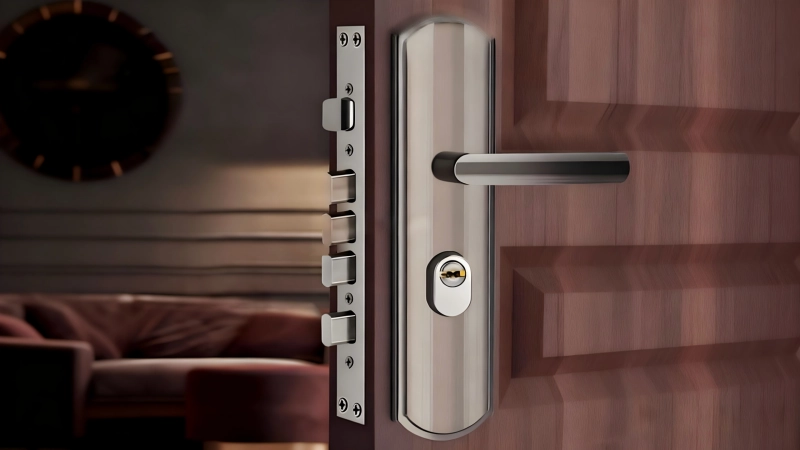
A multi-point lock secures a door at multiple locations along the frame, usually three to five points distributed vertically. When the handle is lifted or the key is turned, all locking points engage at once.
This differs fundamentally from a standard deadbolt, which concentrates all resistance at a single point. In real-world terms, that means a single weak spot becomes the entire system’s failure point.
With multi-point locks, force is spread across the door structure. The result is a door that feels noticeably more solid the moment it’s locked.
Key Components You Should Know
Although designs vary by manufacturer, most multi-point systems include:
A central lock cylinder that controls the system
Multiple bolts or hooks that engage the frame
Reinforced strike plates installed along the jamb
Internal rods or cables connecting the locking points
A handle or lever that activates the mechanism
These components work together as one unit, which is why alignment and installation quality matter so much.
Common Types of Multi-Point Lock Systems
Not all multi-point locks are built the same. The most common types include:
Hook bolt systems, often used on sliding or French doors
Deadbolt-based systems, familiar to North American users
Latch-style systems, widely used in European entry doors
Roller cam designs, common in uPVC applications
Hybrid systems, combining multiple engagement styles
If you’re curious how different door types influence lock selection, This Old House has a well-written breakdown on modern door hardware that complements this topic nicely.

Why Multi-Point Locks Matter for Security
Real Resistance Against Forced Entry
Most forced-entry attempts don’t involve sophisticated tools. They rely on speed, leverage, and pressure—especially kicking or prying near the lock.
Single-point locks tend to fail because all that force is concentrated in one place. Multi-point locks change that equation. With engagement at several locations, the door resists bending, spreading, and frame separation.
It’s not that multi-point doors are “unbreakable”—nothing truly is—but they significantly raise the effort, noise, and time required. In practice, that’s often enough to make intruders move on.
Protection Against Modern Lock Attacks
Beyond physical force, today’s lock systems must also defend against manipulation techniques like bumping, snapping, and drilling.
Most quality multi-point systems now pair with high-security cylinders featuring anti-snap and anti-drill protection. Because multiple points are engaged simultaneously, bypassing one mechanism rarely compromises the entire door.
For readers interested in how lock standards are tested, the BHMA (Builders Hardware Manufacturers Association) regularly publishes technical insights into residential lock performance that are worth reviewing.
Insurance and Code Considerations
In some regions, insurance providers already recognize multi-point locks as enhanced security features. While discounts vary, improved door security can positively influence risk assessments.
Building codes and rental regulations are also evolving. Multi-point locks increasingly appear in specifications for higher-grade residential and mixed-use developments.

Benefits Beyond Security
Better Energy Performance (Yes, Really)
One overlooked advantage of multi-point locks is how tightly they pull the door against the frame. That even compression improves weatherstripping performance, reducing drafts and air leakage.
Over time, this can contribute to noticeable energy savings—especially in climates with extreme temperatures.
Energy-focused publications like Energy.gov frequently emphasize airtight building envelopes, and door sealing plays a larger role than many homeowners expect.
Improved Sound Control
A tighter seal doesn’t just keep air out—it keeps noise out too. Homes near busy streets or dense urban areas often see measurable noise reduction after upgrading to multi-point lock doors.
For bedrooms, home offices, or street-facing entryways, that difference can be surprisingly noticeable.
Door Longevity and Structural Stability
By spreading mechanical stress across the full height of the door, multi-point locks help reduce sagging, hinge wear, and long-term misalignment. Doors stay square longer and require fewer adjustments over their lifespan.
Ease of Use
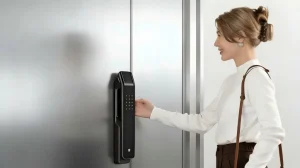
Despite their complexity, most systems are easy to operate. One motion secures the entire door. Many newer systems also support smart locks, automatic locking, and keyless entry options without sacrificing mechanical reliability.

Where Multi-Point Locks Perform Best
Exterior Entry Doors
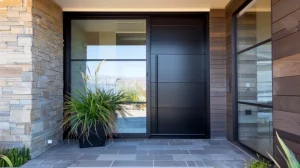
Front and rear entry doors benefit most from multi-point locking, especially in homes prioritizing security, insulation, and long-term durability.
French and Patio Doors
Large glass panels are naturally vulnerable. Multi-point systems reinforce these doors while preserving clean lines and modern aesthetics.
Sliding Doors
Traditional sliding doors are often considered security weak points. Hook-style multi-point locks dramatically improve resistance for both lift-and-slide and standard sliding systems.
Commercial and High-Security Uses
Offices, retail spaces, and institutional buildings increasingly rely on multi-point systems to meet durability and compliance requirements without overcomplicating access control.
Choosing the Right System
Material compatibility matters. Aluminum, wood, uPVC, steel, and composite doors each require different mounting approaches and hardware strength.
Equally important are certifications and ratings, such as ANSI/BHMA grades or European EN standards. These help separate marketing claims from verified performance.
Look for essentials first—minimum three locking points, reinforced strike plates, and quality cylinders—before adding smart or biometric features.
Installation and Maintenance Considerations
Multi-point systems demand precise alignment. Poor installation often leads to stiffness, premature wear, or user frustration.
While retrofitting is possible in some cases, many homeowners find better long-term value in upgrading the entire door system rather than modifying an older slab.
Maintenance is straightforward: occasional lubrication, alignment checks, and seasonal inspection. With proper care, these systems can perform reliably for decades.
Cost, Value, and Long-Term ROI
Initial costs vary widely, but the long-term value often extends beyond security alone. Energy efficiency, reduced maintenance, potential insurance benefits, and improved property value all factor into the return on investment.
When compared to subscription-based security systems, multi-point locks stand out as a one-time upgrade with lasting benefits.
Common Myths Worth Clearing Up
Multi-point locks are no longer limited to luxury homes. Entry-level systems are increasingly accessible, and usability concerns are largely outdated.
That said, installation expertise still matters. Not every locksmith has experience with multi-point hardware, and choosing qualified installers makes a real difference.
Looking Ahead: The Future of Multi-Point Lock Technology
Integration with smart home ecosystems, biometric authentication, and sustainable materials are shaping the next generation of door security—blending mechanical strength with digital convenience.
Conclusion
Multi-point lock entry doors are no longer a niche upgrade. They reflect how modern homes balance security, comfort, efficiency, and durability.
For homeowners planning a door upgrade—or builders specifying higher-performance entry systems—multi-point locks offer a practical, future-ready solution that pays off over time.
Sometimes, the smartest security upgrades are the ones you stop thinking about—because they simply work.
FAQ: Multi Point Lock Entry Doors
1. What is a multi point lock entry door, and how is it different from a standard deadbolt?
A multi point lock entry door secures the door at three or more locations along the frame instead of relying on a single locking point. This design distributes force evenly, making the door more resistant to forced entry while also improving sealing, stability, and long-term performance compared to a traditional deadbolt.
2. Are multi point lock entry doors worth the higher cost?
For many homeowners and projects, yes. While the initial cost is higher, a multi point lock entry door often delivers better security, lower air leakage, reduced maintenance, and a longer service life. Over time, these benefits can outweigh the upfront investment—especially for primary entry doors.
3. Can a multi point lock system be installed on an existing door?
In some cases, retrofitting is possible, but performance depends heavily on the door’s material, thickness, and frame condition. Many older doors were not designed to accommodate multi point hardware, which is why upgrading the entire door system often provides better reliability and value.
4. What door materials work best with multi point locking systems?
Multi point locks work especially well with aluminum, steel, composite, and well-constructed wood doors. Aluminum entry doors, in particular, provide the structural precision needed to keep locking points aligned over time, even with frequent use or temperature changes.
5. Are multi point lock entry doors difficult to use on a daily basis?
Not at all. Most systems are operated with a single handle lift or key turn that engages all locking points at once. Many users find them just as easy—if not easier—to use than managing multiple separate locks.
6. Can multi point lock entry doors be combined with smart locks?
Yes. Many modern multi point lock systems are compatible with smart cylinders or smart lock accessories, allowing for keyless entry, remote access, and temporary codes while retaining full mechanical security as a backup.
7. How do I choose the right multi point lock entry door for my project?
The right choice depends on door size, material, climate exposure, security requirements, and whether the application is residential or commercial. Consulting with a manufacturer or door specialist early in the process helps ensure the lock system, door structure, and hardware are properly matched.
8. What information do I need before requesting a quote?
Providing basic details—such as door type, approximate size, location (interior or exterior), and project timeline—helps suppliers recommend the most suitable multi point lock entry door configuration. Even preliminary information is usually enough to start a technical discussion.