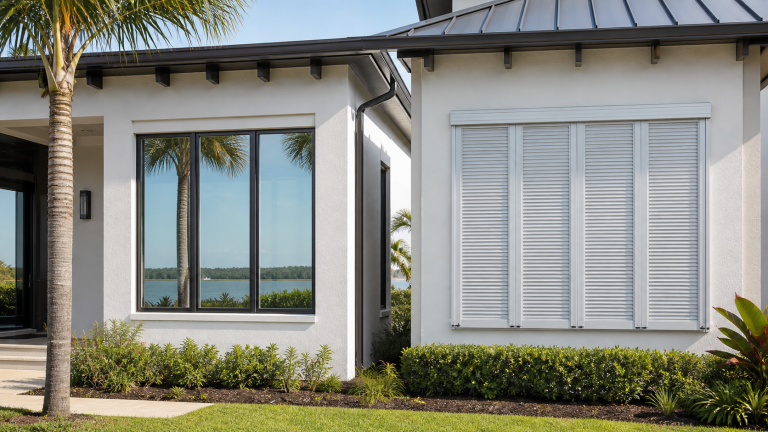
You have decided to replace your old windows with impact-resistant windows, but the homeowners association says you need architectural approval first. Can an HOA deny impact windows in Florida?
For a Chapter 720 HOA, the key question is whether the application conforms to its adopted hurricane-protection specifications. The association cannot reject a conforming application, but the law preserves valid exterior-design controls. It does not give homeowners permission to skip architectural review.
Check the association requirements before ordering, and treat condominium projects separately. This guide explains the current framework and the documents to prepare.
What Changed for Florida HOAs?
Under Florida Statute 720.3035(6), HOA boards or architectural committees must adopt hurricane-protection specifications. These may address color, style and other relevant factors, and must comply with the applicable building code. Impact-resistant windows and doors are expressly included.
The rules apply regardless of when the community was created. A conforming application receives statutory protection, while an existing unified exterior scheme can still matter.
These protections are not all new in 2026: the official 2024 HB 293 analysis documents their earlier origin. A separate 2026 change addresses permit timing, explained below.
What Can the HOA Still Control?
Window Color
An HOA can have a legitimate interest in keeping a consistent exterior appearance.
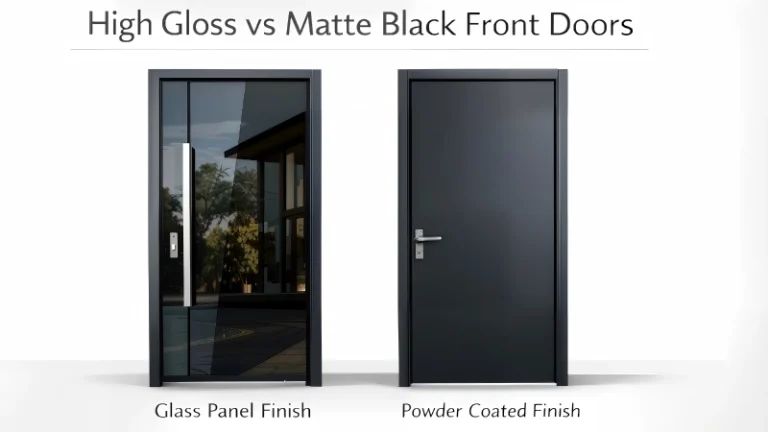
If every home in a development uses white exterior frames, ordering matte-black impact windows without checking the architectural specifications first can create a problem.
Window Style
The association’s specifications may address exterior style.
Changing a traditional single-hung window into a large modern casement may alter the facade even if both products meet building-code requirements.
Grid Pattern
Colonial grids, prairie grids, clear glass and other visible design details can materially change a home’s appearance.
Check the approved scheme before manufacturing custom units.
Exterior Profile
Aluminum-frame depth, sightlines and mullion arrangements can also affect architectural appearance.
This matters particularly when replacing older vinyl or wood windows with narrow-profile aluminum systems.
What an HOA Cannot Replace: Building-Code Approval
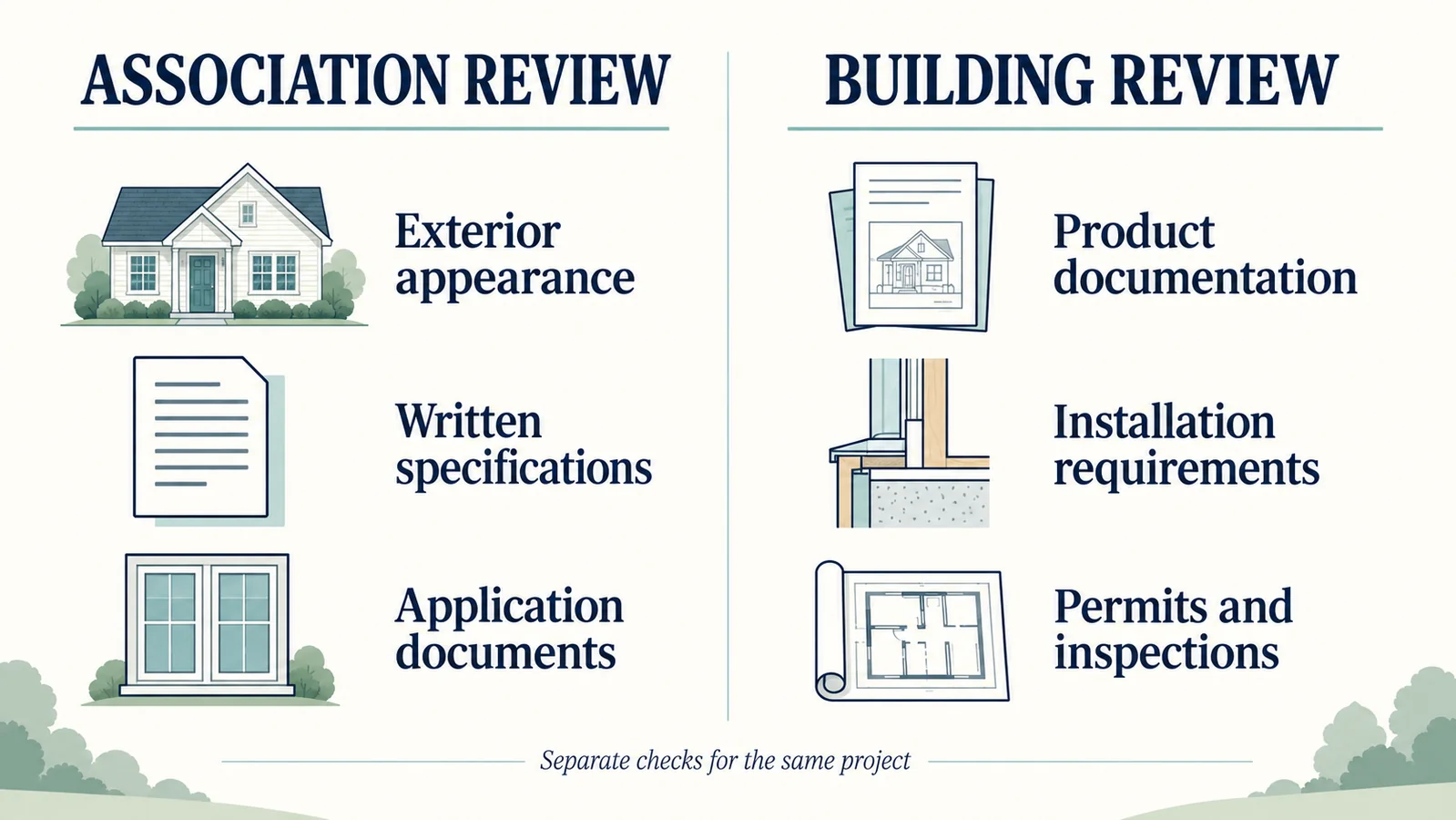
HOA approval and building-code approval are two separate processes.
An architectural committee approving the color of a window does not establish that the window is suitable for the project.
A Florida project may separately require:
- building permit;
- product approval documentation;
- impact documentation where required;
- project-specific design pressure;
- installation drawings;
- inspections.
Likewise, finding a Florida Product Approval number does not automatically mean an HOA must accept every visual configuration of that product.
Think of the process as two parallel checks:
Association review → exterior/community requirements
Permit review → building-code requirements
You may need both.
Can the HOA Require a Building Permit Before Reviewing the Application?
For a Chapter 720 HOA, no: section 720.3035(1)(c) prohibits making an issued government building permit a prerequisite to association or committee review.
Chapter 2026-63, sections 11 and 12, added this provision effective July 1, 2026. That distinction matters when planning the submission sequence.
This rule concerns the start of association review. It does not waive any required building permit or authorize construction before the necessary approvals. Coordinate both processes with the contractor and local building department.
What About Florida Condominiums?
Condos require a separate analysis.
Florida condominium associations operate primarily under Chapter 718 rather than Chapter 720.
Section 718.113(5) says residential and mixed-use condominium boards must adopt hurricane-protection specifications for each applicable building. Those specifications may include color, style and other relevant factors and must comply with the applicable building code.
If condominium documents require approval, the statute says a board may not refuse to approve a unit owner’s installation or replacement of hurricane protection that conforms to the adopted specifications.
However, there is an additional issue:
Who is responsible for the exterior windows?
Check the Declaration Before Ordering
In a condominium, exterior windows may be:
- association responsibility;
- unit-owner responsibility;
- subject to shared responsibilities;
- treated differently for maintenance and replacement.
The declaration matters.
Do not place a custom window order simply because a salesperson says, “Florida law says the condo has to allow it.”
The association may have responsibility for the actual window component even though the hurricane-protection statute limits its ability to reject a conforming owner installation in the circumstances covered by the law.
Can a Condo Require a Unified Exterior Appearance?
Yes. Section 718.113(5)(c) allows a board to require conformity with an existing unified exterior building scheme. For example, a proposed white frame may conflict with a bronze-frame elevation. Confirm the required finish before production and ask how the declaration assigns window responsibilities.
What Should You Ask the HOA Before Ordering Impact Windows?
Request the hurricane-protection or architectural specifications in writing.
Then ask for the current requirements covering:
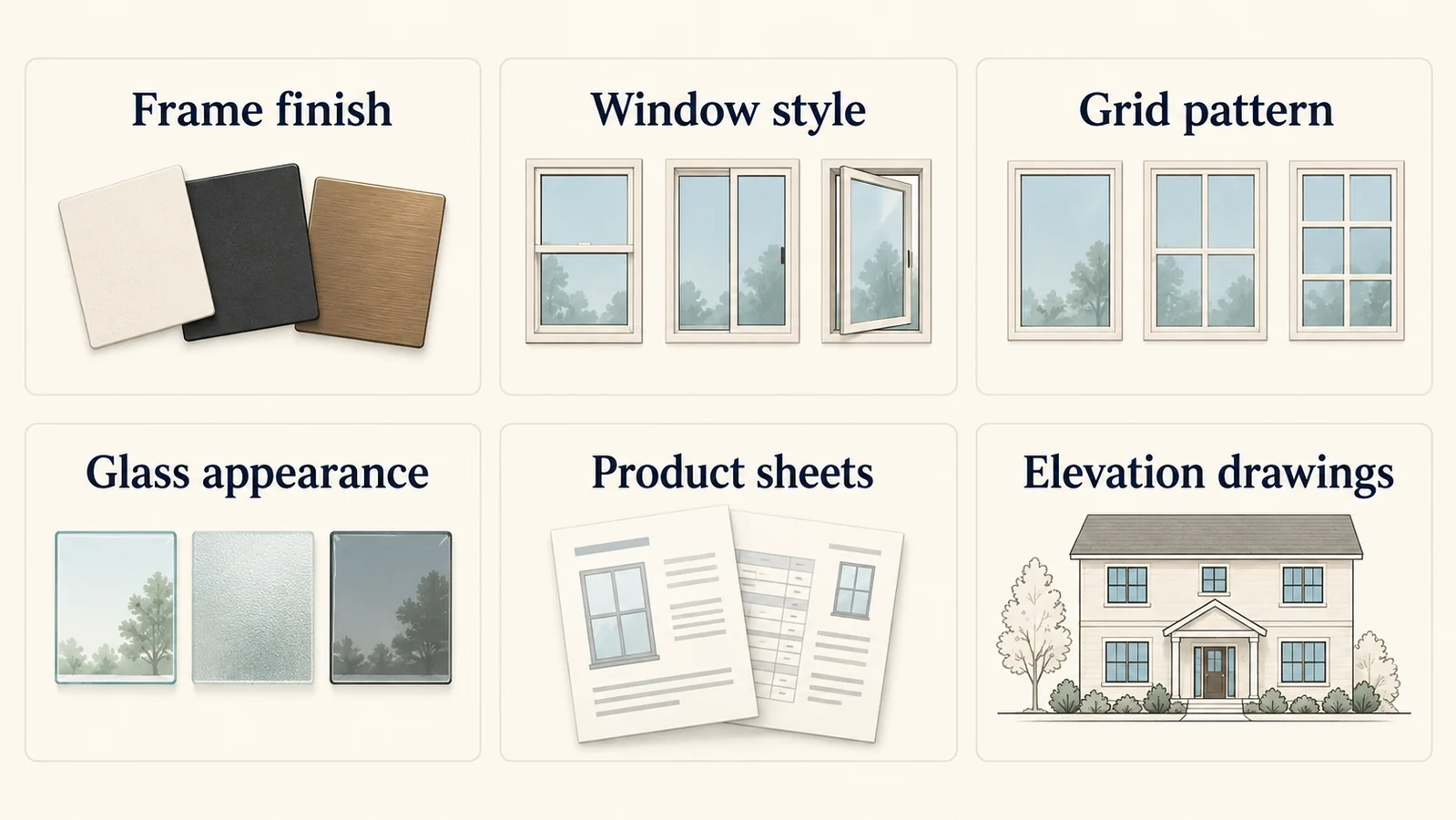
Approved Frame Colors
Get the exact color or finish.
If the HOA specifies bronze, white or black, do not rely on a verbal description.
Where possible, request an approved physical sample or exact finish reference.
Approved Window Styles
Confirm whether the association permits:
- single hung;
- casement;
- awning;
- fixed;
- horizontal sliding;
- other configurations.
Grid Requirements
Ask whether muntins or grids are required and what pattern is permitted.
Glass Appearance
Some associations regulate visible tint or reflectivity.
Required Application Documents
The HOA may request:
- product brochure;
- elevation;
- color sample;
- contractor information;
- insurance information;
- product approval documentation;
- drawings.
Do not assume every association uses the same package.
What Should You Ask the Window Supplier?
Once you know the HOA’s visual requirements, the supplier needs enough information to create a configuration that can satisfy both the project design and technical requirements.
Send:
- opening schedule;
- width and height;
- window type;
- exterior color;
- interior color if different;
- grid pattern;
- glass appearance;
- impact requirement;
- required design pressure;
- applicable product documentation;
- project city and county.
For Florida projects, appearance should never be the only selection criterion.
The exact product must also be suitable for the intended opening and applicable permit requirements.
Does an FL Number Mean the HOA Must Approve the Window?
No.
A Florida Product Approval relates to building-product evaluation.
It does not decide architectural appearance.
RUTAO’s impact-window verification guide explains why even an FL number must be matched to the exact product series and configuration before being treated as evidence of impact resistance.
An HOA may still review legitimate exterior requirements such as:
- color;
- style;
- grids;
- unified facade appearance.
At the same time, a conforming hurricane-protection application receives the statutory protections described in §720.3035 or, for condominiums, the applicable provisions of §718.113.
What If the HOA Rejects Your Application?
First, request a specific written reason. For Chapter 720 applications, section 720.3035(4)(a) requires a denial notice to identify the rule or covenant relied on and the part of the proposal that does not conform.
Then compare the denial with:
- the declaration;
- published architectural standards;
- hurricane-protection specifications;
- the current Florida statute;
- your submitted window configuration.
A denial because your black frame violates a valid white-frame specification is very different from a blanket statement that the community does not allow impact-resistant windows at all.
Do not immediately order the windows while the issue is unresolved.
Custom impact windows can be difficult or expensive to change after manufacturing.
If the dispute involves interpretation of association authority or governing documents, consult a Florida attorney experienced in community-association law.
A manufacturer should provide technical product documentation—not legal advice about your HOA dispute.
Impact Windows Still Need the Right Performance
HOA approval does not replace engineering.
A Florida impact window may still need to satisfy project-specific requirements for:
- impact resistance;
- positive design pressure;
- negative design pressure;
- dimensions;
- glazing;
- anchors;
- installation conditions.
Design pressure is particularly important.
A product series does not necessarily have one universal DP rating for every size.
RUTAO’s design-pressure guide explains how larger sizes and different configurations can change positive and negative pressure capacity.
For custom windows, verify the exact configuration rather than selecting a product only because the brochure says “hurricane rated.”
The Florida hurricane retrofit guide also stresses appropriate product approval and installation. Save the applicable drawings for the exact assembly; a generic product brochure is not a project specification.
A Better Order of Operations
Ordering first and asking permission later can create an expensive conflict.
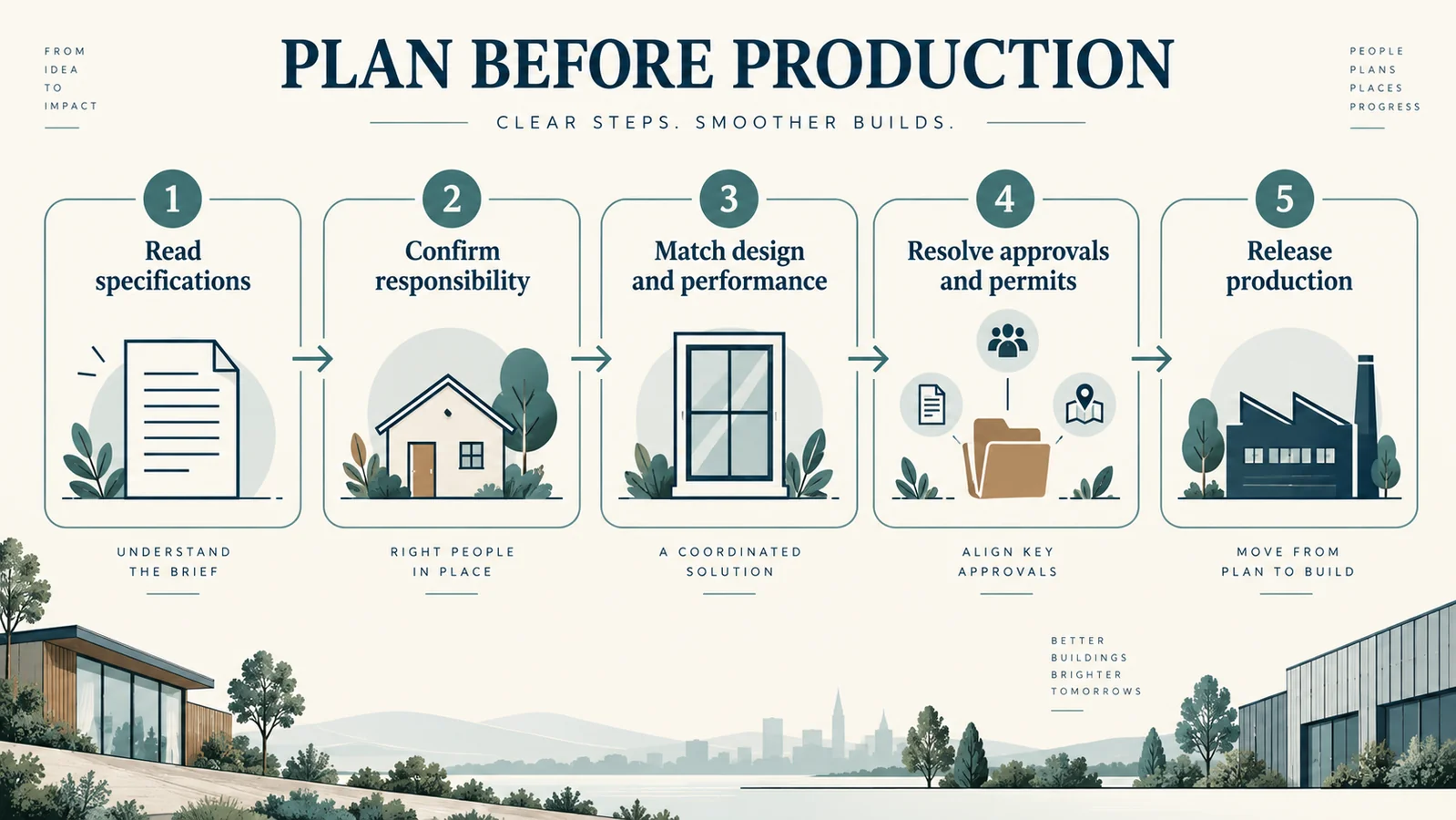
Use these planning milestones. Association and permit work may proceed in parallel; the sequence is not a requirement to obtain a permit before association review.
Step 1 — Get the HOA Specifications
Obtain the current written hurricane-protection and architectural requirements.
Step 2 — Check Ownership Responsibility
For a condo, confirm whether the declaration assigns the windows to the owner or association.
Step 3 — Build the Opening Schedule
Record dimensions and window styles for every opening.
Step 4 — Match the Exterior Design
Choose frame color, style, grids and glass appearance that conform to the association requirements.
Step 5 — Verify Technical Requirements
Check impact status, design pressure, product documentation and installation conditions.
Step 6 — Submit the HOA Application
Provide the requested drawings, product sheets and finish information.
Step 7 — Complete the Permit Process
HOA approval does not substitute for required government permits.
Step 8 — Release Custom Windows for Production
For a made-to-order product, production should begin only after the critical design and approval issues are resolved.
How RUTAO Can Prepare a Custom Window Package
RUTAO can customize aluminum window and door systems for project dimensions, glazing requirements, finishes and hardware configurations. Send the association’s written exterior requirements with your opening schedule and request drawings for the proposed configuration.
Ask whether that specific configuration can satisfy the project requirements while matching the approved exterior design. Review the supporting documentation before production; customization alone does not establish an approval.
For help preparing an RFQ, see our guide to choosing a custom aluminum window and door manufacturer.
Final Takeaway
Resolve association requirements and window responsibility before committing to a custom order. Match the proposed appearance, verify the exact technical configuration, complete the required reviews and keep the written records together.
A well-organized application gives the association and contractor the same product information. If a denial raises a legal dispute, take the documents to a Florida community-association attorney rather than relying on a sales promise.
Frequently Asked Questions
Can a Florida HOA completely ban impact windows?
A Chapter 720 HOA may not deny a hurricane-protection application that conforms to its adopted specifications. Impact-resistant windows and doors are included, but valid exterior-design requirements still apply.
Do I still need HOA approval before installing impact windows?
Follow any required architectural application process. Protection for a conforming application does not authorize homeowners to skip valid association procedures or required building permits.
Can my HOA choose the color of my impact windows?
Hurricane-protection specifications may include color and style, and the association may require conformity with an existing unified exterior scheme. Check the written requirements before ordering.
Are condominium rules the same as HOA rules?
No. Residential and mixed-use condominiums have a separate framework under Chapter 718. Check the declaration, window responsibility and the board specifications before arranging an owner-led replacement.
Can a Chapter 720 HOA require an issued permit before reviewing my application?
No. Since July 1, 2026, section 720.3035(1)(c) prohibits that prerequisite to association review. Any permit required for the actual work is still necessary.
Does a Florida Product Approval number guarantee HOA approval?
No. Product approval does not settle the association appearance requirements. The documentation must also match the exact product and the project conditions.