You just replaced the old windows in your Florida home with impact-resistant windows. The permit is closed, and the installer is gone. Will your homeowners insurance automatically recognize the upgrade?
Do not assume it will. For a wind mitigation inspection after impact windows, first save the project documents, ask your insurer what it needs, and arrange a qualified inspection when appropriate. The completed report must then reach the insurer for review.
This guide explains the paperwork, whole-home opening check and submission steps.
What Is a Florida Wind Mitigation Inspection?
A wind mitigation inspection documents features of a home that can reduce damage during high-wind events.
These features can include:
- roof covering;
- roof-deck attachment;
- roof-to-wall connections;
- roof geometry;
- secondary water resistance;
- opening protection.
Windows and doors form part of the opening-protection assessment.
Florida Statute 627.0629 requires residential-property insurance rate filings to include actuarially reasonable discounts, credits or other rate differentials for qualifying wind-loss mitigation features. The statute specifically includes opening protection and the strength of windows, doors and skylights among the relevant construction techniques.
That does not mean installing impact windows guarantees a particular dollar discount.
It means properly documented mitigation features can be considered under the insurer’s approved rating structure.
What Changed in 2026?
The Florida Office of Insurance Regulation identifies OIR-B1-1802 (Rev. 04/26) as the required form for inspections on or after April 1, 2026. This is an existing 2026 requirement, not a new September rule. See the official wind mitigation resources.
For a new inspection, confirm that the inspector uses the current form. Do not download an old form and complete it yourself.
Florida Statute 627.711 identifies eligible professionals, subject to its qualifications, including certain licensed home inspectors, building-code inspectors, contractors, professional engineers and architects.
Do You Need a New Wind Mitigation Inspection After Replacing Windows?
There is no useful one-word answer for every homeowner.
If you already have a valid wind mitigation report but then replace major exterior openings, the old report may no longer describe the current condition of the house.
That creates a practical reason to contact your insurer or insurance agent and ask whether an updated inspection should be submitted.
The important question is:
Does the wind mitigation documentation your insurer has on file accurately describe the opening protection installed today?
If the old inspection lists your bedroom windows, sliding door or other openings as unprotected—and those openings have now been upgraded—your current improvements may not be reflected in the existing report.
An updated inspection gives a qualified inspector the opportunity to document the new condition.
The Florida Department of Financial Services says an inspection can remain valid for up to five years only if there are no material changes or inaccuracies. A report’s age alone does not settle whether it still describes the home.
Does Installing Impact Windows Automatically Give You an Insurance Discount?
No. Impact windows may contribute to mitigation eligibility, but the insurer evaluates the documented features under its rating structure. A supplier cannot promise the same percentage or dollar saving for every home.
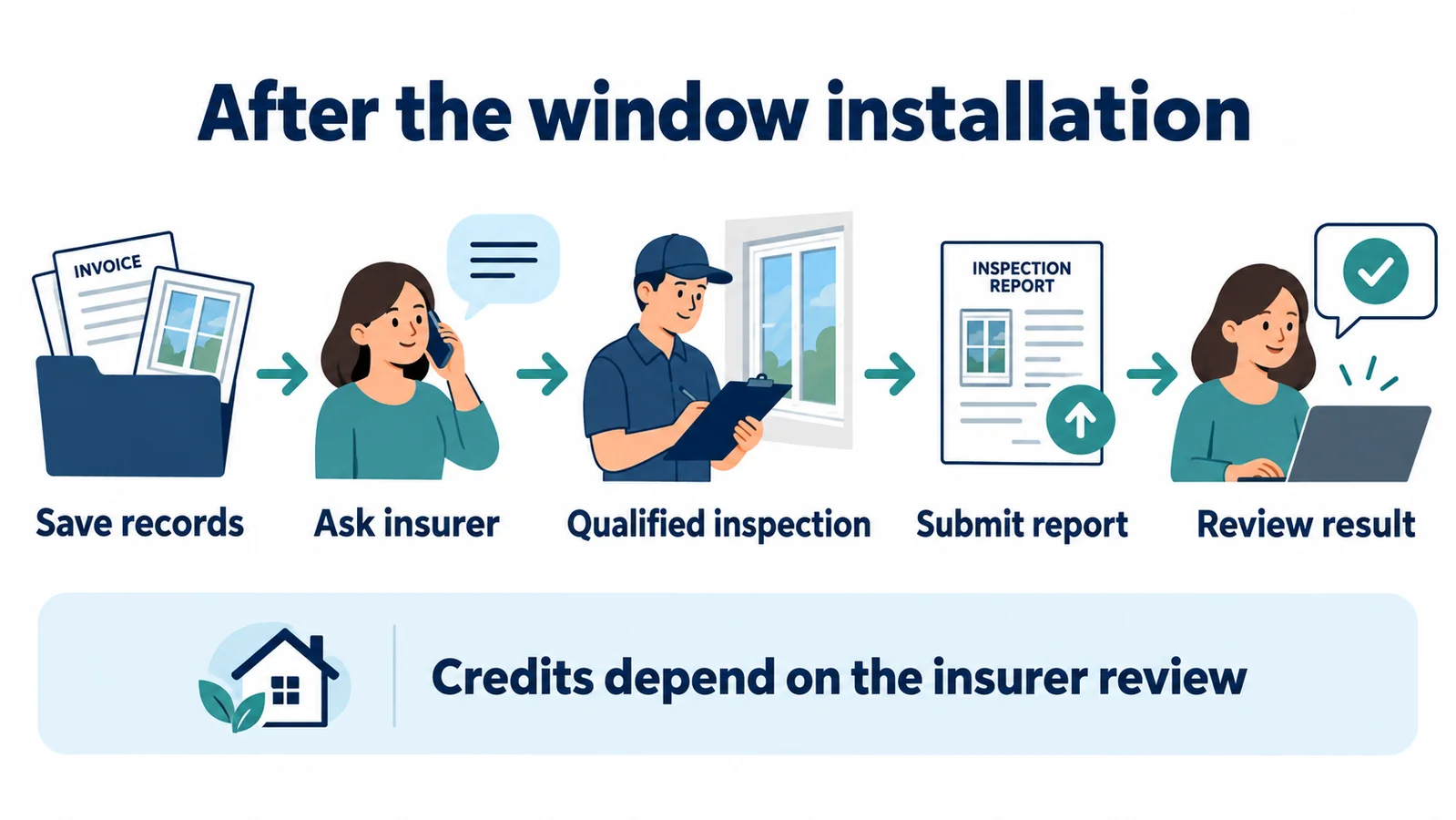
Follow the process: complete the work, document it, obtain the appropriate inspection, submit the report and review the insurer’s decision.
Why All Exterior Openings Matter
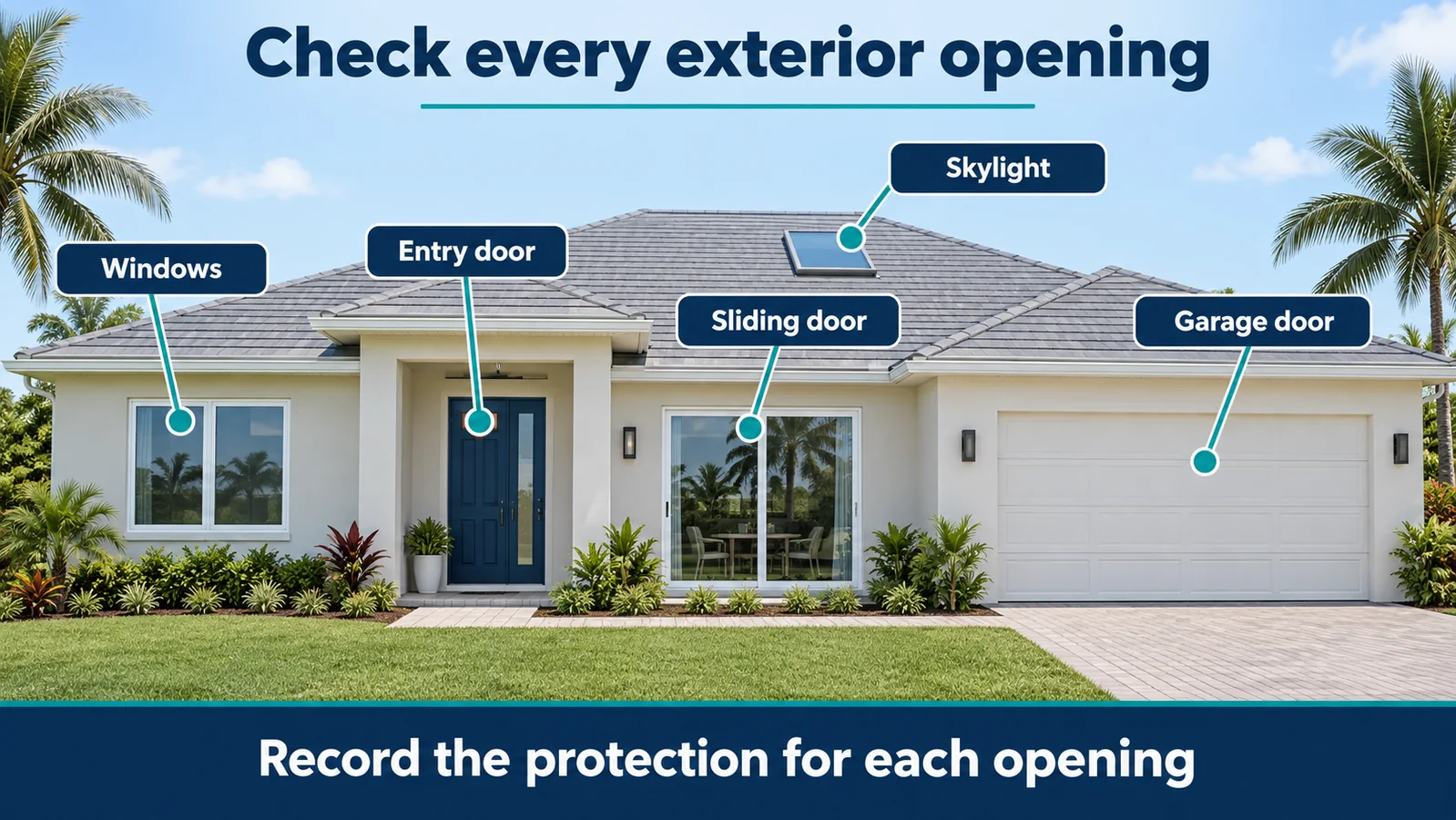
Replacing the front windows with impact glass does not necessarily mean the entire home has complete opening protection.
A Florida house may contain:
- impact-rated front windows;
- older bedroom windows;
- a protected entry door;
- a non-impact sliding glass door;
- a garage door with different documentation;
- skylights;
- shutters protecting selected openings.
This is why RUTAO’s guide to identifying impact-resistant windows recommends treating every opening separately rather than assuming one impact window proves the entire house is protected.
For insurance mitigation purposes, incomplete opening protection can affect how the property is classified.
Before the inspector arrives, make an opening schedule.
List every:
- window;
- exterior glazed door;
- sliding glass door;
- skylight;
- garage-door opening;
- other relevant exterior opening.
Then note how each one is protected.
Question 9 of the current inspection form records the weakest glazed protection separately from the weakest non-glazed protection. It includes garage doors and skylights but excludes gable and other roof vents. Damaged protection also needs attention. Let the qualified inspector determine the classification rather than assigning it from a window count.
What Documents Should You Save After Installing Impact Windows?
Do not throw away the project paperwork once the permit is closed.
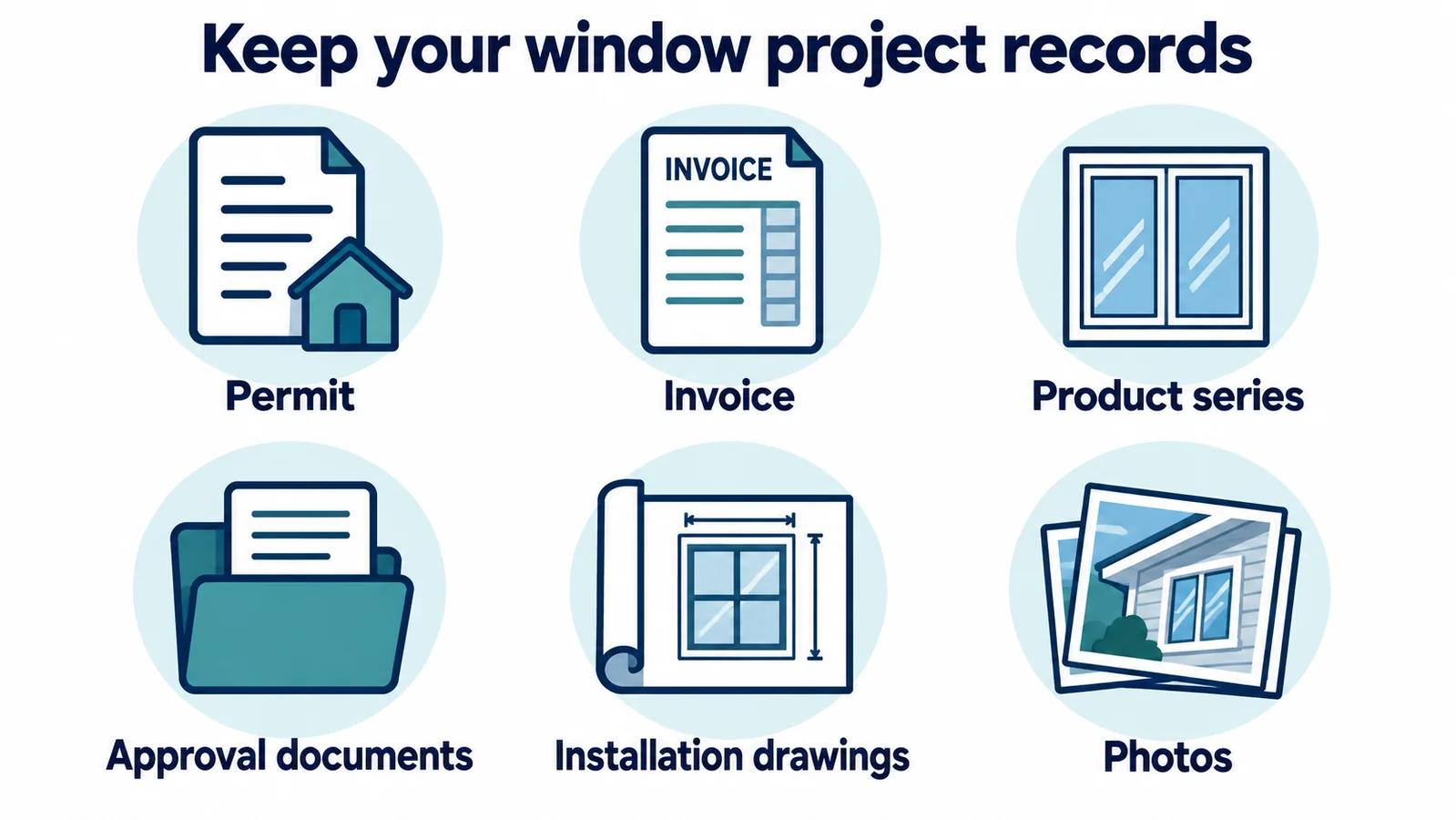
Keep a digital folder for the house.
1. Final Invoice
The invoice should identify the products installed and the project address.
A generic receipt saying “10 hurricane windows” is much less useful than documentation identifying the actual product series.
2. Product Series and Model Information
Record the manufacturer and exact series.
One manufacturer can produce both impact and non-impact versions of similar-looking windows.
3. Florida Product Approval Information
Where applicable, retain the Florida Product Approval information corresponding to the installed product.
An FL number alone does not automatically prove impact resistance. The exact approval record and configuration need to be checked; our Florida Product Approval guide explains the matching process.
4. Miami-Dade NOA, Where Applicable
For products documented through a Miami-Dade Notice of Acceptance, save the applicable NOA and supporting installation documentation.
Again, match the document to the exact product rather than saving a random approval from the manufacturer’s website.
5. Installation Drawings
Keep the installation instructions and approval drawings used for the project.
They can identify:
- allowable dimensions;
- glass configuration;
- anchoring;
- substrates;
- design pressure;
- impact status;
- limitations.
6. Permit and Final Inspection Records
Save the permit number and final inspection or closure documentation.
Permit records can be useful years later when a future owner, inspector or insurer tries to establish when an upgrade occurred.
7. Photos
Take clear photographs after installation.
Useful images include:
- full exterior opening;
- interior view;
- permanent frame identification;
- accessible labels;
- glass markings;
- product stickers before they are removed, where appropriate.
Do not remove permanent labels or disassemble the window just to create documentation.
What Will the Inspector Look at?
A wind mitigation inspector is evaluating the property—not your sales brochure.
For opening protection, the inspector needs evidence that supports the classification entered on the mitigation form.
The exact inspection procedure is the inspector’s responsibility, but homeowners can make the process easier by having organized documentation ready.
Prepare a folder containing:
permit → invoice → product schedule → approvals → installation drawings → photos
If you have several different window types, separate the documents by opening or product series.
For example:
W01–W06: impact casement
W07–W10: impact fixed
D01: impact sliding door
This becomes especially useful in a house that has been renovated in several phases.
For Citizens policyholders, its current wind loss mitigation guide explains supporting photographs and compliance documentation. That guide is specific to Citizens; ask your own insurer about its submission process.
What If Only Some Windows Were Replaced?
Do not tell the inspector that the “house has impact windows” if only some openings were upgraded.
Document the actual condition.
Imagine a house with:
- eight new impact windows;
- two older non-impact windows;
- one impact front door;
- one older sliding glass door.
The correct documentation should reflect those differences.
If the remaining openings use shutters, keep the documentation for those protection systems as well.
The goal is not to make the house sound stronger than it is.
The goal is to give the inspector accurate evidence.
Do Design Pressure Ratings Matter?
They can matter to product and permit documentation, but do not confuse design pressure with impact resistance.
These are different performance characteristics.
Design pressure addresses structural wind loading.
Impact resistance addresses the tested assembly’s ability to withstand specified debris-impact and cycling requirements.
A window can have a strong structural pressure rating and still not be an impact-rated assembly.
RUTAO’s guide to impact-window design pressure explains why positive and negative pressure values also change with window size, building conditions and exact product configuration.
When saving project documents, retain both the impact documentation and applicable pressure information.
What If You Cannot Find the Window Approval Documents?
Start with the installer or supplier.
Ask for:
- manufacturer;
- product series;
- approval reference;
- installation drawing;
- glass configuration;
- quoted dimensions.
Then compare those details with the actual installed windows.
If the project was permitted, check whether the local building department’s permit file contains product-approval documents.
Do not choose a similar-looking approval simply because the brand name matches.
The record should correspond to the actual product.
Should You Schedule the Inspection Before or After Installation?
For documenting a completed window upgrade, the relevant new condition needs to exist before it can be inspected.
A practical sequence is:
Step 1 — Finish the Installation
Complete the permitted window work.
Step 2 — Organize the Documentation
Collect invoices, approval records, permits, drawings and product information.
Step 3 — Contact Your Insurer or Agent
Ask what they need to update the property’s wind-mitigation information.
Step 4 — Use a Qualified Inspector
Florida law specifies the types of professionals whose signed forms insurers must accept under the statutory conditions.
Step 5 — Submit the Completed Form
Send the completed mitigation form through the method requested by your insurer.
Step 6 — Review the Policy Result
Do not assume a credit was automatically applied.
Check the updated policy documents or speak with the insurer/agent about the result.
RUTAO’s Documentation-First Approach
RUTAO can customize aluminum door and window systems for project dimensions, glazing requirements, finishes and hardware configurations. For a Florida project, start with the required performance and documentation.
A useful sequence is: project location, opening schedule, permit requirements, impact and pressure criteria, documented configuration, shop drawings and manufacturing.
Planning another phase? Use our guide to choosing a custom aluminum window and door manufacturer and request documentation for the exact proposed configuration. Do not assume every product or size has the same approval.
Final Checklist After Installing Impact Windows
Keep the invoice, product identification, applicable approvals, installation drawings, permit records and photographs together. List all openings, including those left unchanged. Contact your insurer about updating its records, arrange a qualified inspection when appropriate, and confirm receipt of the completed report.
Impact windows do not update an insurance file by themselves. Accurate records help the inspector document the improvement and the insurer evaluate it.
Frequently Asked Questions
Do I need a new wind mitigation inspection after installing impact windows in Florida?
Ask your insurer or agent whether the existing report still describes the home. Replacing openings can change the documented protection, so an updated qualified inspection may be appropriate.
Which wind mitigation form applies to a new inspection in 2026?
For inspections on or after April 1, 2026, Florida requires OIR-B1-1802 (Rev. 04/26). Check the revision before arranging a new inspection.
Will impact windows guarantee a specific insurance discount?
No. The insurer evaluates the documented mitigation features under its rating structure. A window purchase alone does not guarantee a particular percentage or dollar saving.
Can I submit my installation invoice instead of an inspection report?
An invoice helps identify the purchase but does not replace a required qualified inspection. Ask the insurer which report and supporting documents it needs.
What if only some windows have been replaced?
Identify each upgraded and unchanged opening, including doors, skylights and the garage door. Give the inspector the actual protection details rather than describing the entire home as impact protected.
Does a high design pressure rating prove impact resistance?
No. Structural wind pressure and debris-impact performance are different characteristics. Keep documentation for the exact assembly and let the qualified professional verify the relevant requirements.