Florida is approaching another major building-code transition.
The 9th Edition (2026) Florida Building Code is listed with an effective date of December 31, 2026, according to ICC, the code publisher. The Florida Building Commission currently identifies the 8th Edition (2023) as the active code cycle. For homeowners, builders, architects and developers planning impact-window or door projects in late 2026 or 2027, that date matters.
But there is also a lot of confusing information online.
Some articles make it sound as if every home in Florida will suddenly need hurricane impact windows. Others suggest that one specific product rating will work everywhere in the state.
Neither is a safe way to specify a project.
Florida window requirements depend on several factors, including the building location, wind-borne debris exposure, whether the property is in the High-Velocity Hurricane Zone, building type, opening dimensions, design pressure and the product approval applicable to the exact window configuration.
This guide explains what impact-window buyers should know as Florida moves toward the 9th Edition.
When Does the Florida Building Code 9th Edition Take Effect?
The key date is:
December 31, 2026
ICC lists that effective date for its Ninth Edition Building volume. Confirm the applicable edition and any transition procedures with your permitting authority.
This matters especially for projects being designed or quoted in the final months of 2026.
A window package may involve several stages:
- architectural design;
- engineering;
- product selection;
- approval-document collection;
- permit submission;
- manufacturing;
- installation;
- inspection.
Do not assume the installation date alone determines which technical requirements apply.
The safest approach for a project close to the transition is to verify the applicable code edition directly with the local building department when preparing the permit.
Separate Code Changes From Project Requirements
The Florida Building Commission’s 2026 development page provides the official update materials, tracking charts and comment records. On September 13, 2026, it still lists a second glitch-change process with a comment period ending October 8. A proposed amendment or public comment is not the same as an enforceable requirement.
One useful baseline is already documented: the Commission’s ASCE 7-22 wind-load fact sheet explains that the 8th Edition adopted ASCE 7-22. Do not describe that earlier change as a newly introduced 9th Edition requirement.
For a project approaching the transition, ask the responsible building professional to identify the applicable volumes, adopted amendments and permit requirements. This guide is a buying and documentation checklist, not a comprehensive analysis of every code change.
Wind-Borne Debris Regions Still Matter
One of the most important terms in Florida hurricane-window specifications is Wind-Borne Debris Region, commonly shortened to WBDR.
The applicable code defines this region using wind-design criteria and site conditions. Have the design professional or building department establish the designation for the address and building type. A broad coastal label is not a substitute for that determination.
Why does this matter?
Because a glazed opening located in a wind-borne debris region may require impact protection or an approved protective system depending on the project and applicable code provisions.
Do Not Buy a Window From a Statewide Map Alone
A Florida address is not enough to determine the exact required window specification.
Wind design can depend on:
- exact project location;
- building height;
- exposure;
- risk category;
- opening size;
- location of the opening on the building;
- local jurisdiction requirements.
That is why a supplier should not simply say:
“This is a Florida hurricane window, so it will work.”
The required design pressure and approval documents should be checked for the actual project.
What Is the HVHZ?
Florida has another important designation:
High-Velocity Hurricane Zone, or HVHZ.
The HVHZ covers Miami-Dade and Broward Counties, as described in Miami-Dade’s mitigation strategy. Its code provisions address hurricane-resistant building systems.
A window suitable for a project elsewhere in Florida is not automatically acceptable for an HVHZ installation.
This is particularly important for imported aluminum windows.
The window may look strong. It may use laminated glass. It may even have a high structural design pressure.
But code compliance depends on the tested and approved assembly, including components such as:
- frame;
- glass;
- interlayer;
- hardware;
- fasteners;
- anchorage;
- maximum dimensions;
- installation condition.
For HVHZ projects, the approval documentation should explicitly support use in that jurisdiction and for the proposed configuration.
Florida Product Approval vs. Miami-Dade NOA
Buyers frequently confuse these two terms.
Florida Product Approval
Florida maintains a statewide product-approval system for regulated building products.
A product approval can define:
- approved product series;
- allowable sizes;
- design pressures;
- substrates;
- fasteners;
- installation details;
- limitations of use.
However, simply seeing a Florida approval number does not mean every configuration is automatically suitable for every project.
Miami-Dade NOA
A Miami-Dade Notice of Acceptance, commonly called an NOA, is an approval issued through the county’s Product Control process. That process reviews supporting tests, engineering and installation documentation.
For projects in South Florida, especially the HVHZ, buyers should verify exactly which approval applies rather than assuming “Florida approved” and “Miami-Dade approved” mean the same thing.
Miami-Dade’s window and door permit guidance also states that Florida Building Commission approvals are acceptable. Verify the approval’s HVHZ scope and exact configuration; do not assume an NOA is the only possible route or that every statewide approval covers HVHZ use.
The Window Is a System, Not Just Impact Glass
One of the most common specification mistakes is to focus only on laminated glass.
Impact-resistant glazing is critical, but it is only one component.
An impact window must function as a complete engineered assembly.
Consider a large aluminum casement window.
Even if the laminated glass can resist debris impact, the system could still fail if:
- the frame is undersized;
- the corner joints are inadequate;
- the locking system cannot resist pressure;
- anchors are spaced incorrectly;
- the wall substrate does not match the approved installation;
- the window exceeds the maximum tested size.
That is why product documentation matters just as much as the phrase “hurricane glass.”
Design Pressure Still Needs Project-Specific Attention
For a fuller explanation, see RUTAO’s impact window design pressure guide.
Design Pressure, or DP, describes the pressure that a window or door system is designed and tested to resist under specified conditions.
Buyers sometimes treat DP like a universal hurricane category.
For example:
“DP50 means this window is good for Florida.”
That is too simplistic.
The required pressure for an opening depends on the building and the opening location.
A small ground-floor window on one elevation may not have the same required pressure as a large second-story window near a building corner.
Why Negative Pressure Matters
Wind does not only push against a building.
It can also create suction.
That means window documentation often contains positive and negative pressure ratings.
For large aluminum windows and doors, both sides of the rating deserve attention during engineering review.
What About Existing-Home Replacement Exceptions?
Replacement projects introduce another layer of complexity. New openings, repairs and replacement work may follow different applicable provisions. The building type and the scope of the work also matter.
Do not use an online summary of the so-called 25% rule as permission to divide a project into phases. Ask the local building department to identify any applicable exception, its area calculation and time period, and the documentation needed to establish eligibility. Do that before ordering, rather than assuming every existing home qualifies.
Do Impact Windows Become Mandatory Everywhere in Florida?
No.
The Florida Building Code does not turn every window in every Florida building into an impact-window requirement simply because the state experiences hurricanes.
The relevant code provisions still depend on building location and project conditions.
In wind-borne debris regions, compliant opening protection may include impact-resistant fenestration or another approved protective system, depending on the applicable provision.
This distinction matters when comparing permanent impact glazing with hurricane shutters.
What Should Buyers Check Before Ordering Windows for 2027?
For a Florida project planned under the new code cycle, create a documentation checklist before manufacturing begins.
1. Confirm the Project Location
Determine whether the building is in:
- HVHZ;
- WBDR;
- another Florida wind region.
Do not rely solely on county name if a more precise wind-design analysis is required.
2. Determine Required Design Pressures
The architect, engineer, contractor or other responsible professional should establish the appropriate project criteria.
3. Match the Exact Window Series
Do not substitute a visually similar frame because it is cheaper or available sooner.
4. Match the Exact Glass Configuration
The approved window may specify particular laminated glazing, thicknesses, interlayers or IGU configurations.
5. Check Maximum and Minimum Sizes
Custom does not mean unlimited.
Impact-system approvals normally define dimensional limits.
6. Check Anchoring
The approval may specify anchor type, embedment, spacing and substrate requirements.
7. Keep Current Approval Documents
A project file should include relevant:
- approval documents;
- engineering drawings;
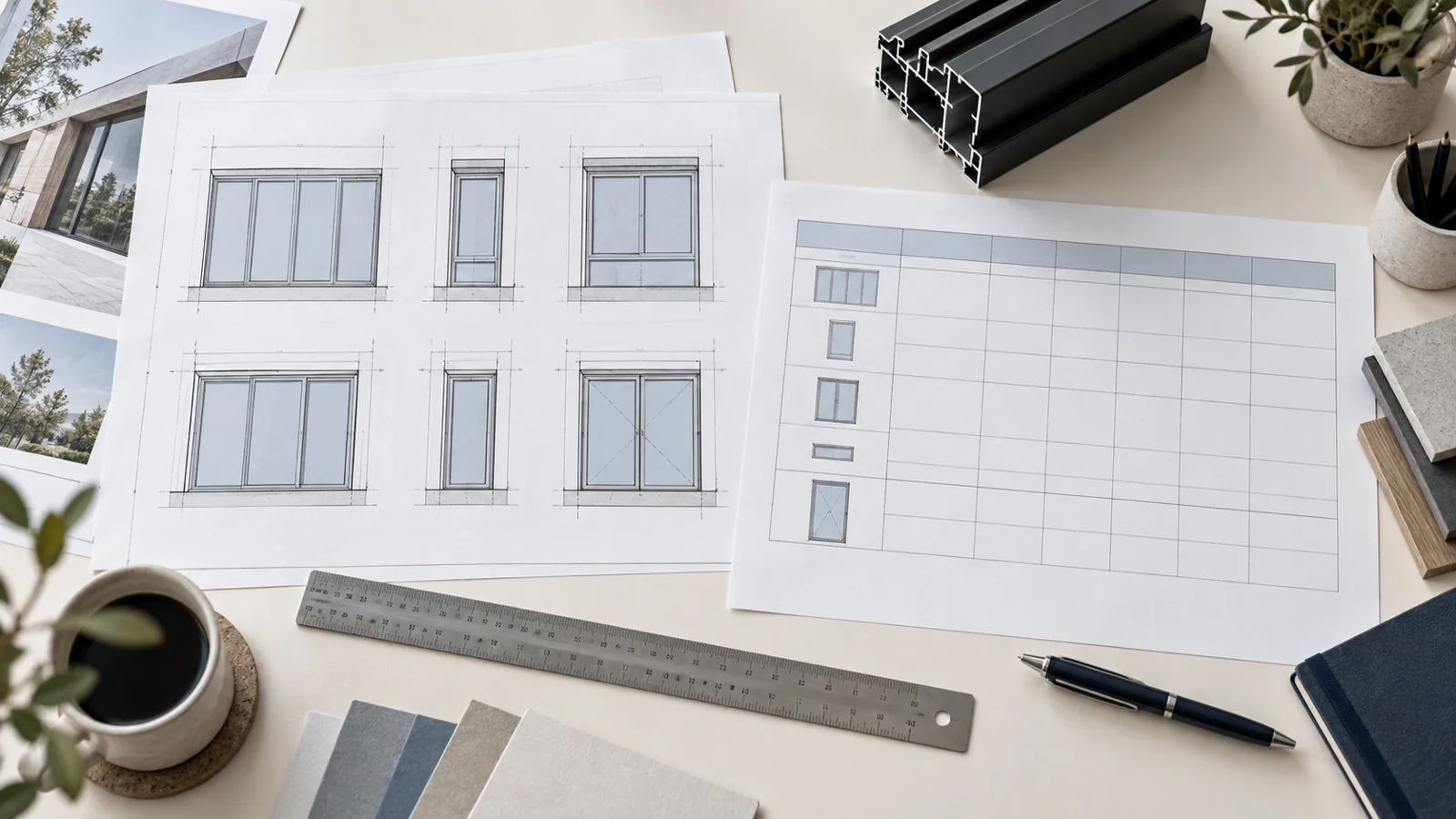
- window schedules;
- glass specifications;
- design-pressure information;
- installation instructions.
Miami-Dade’s published checklist calls for sizes, approval numbers, glazing options and positive and negative pressures. Use it as a local example; obtain your own jurisdiction’s submission requirements.
That documentation can help resolve questions during permit review.
RUTAO’s Approach to Florida Impact-Window Projects
RUTAO manufactures custom aluminum windows and doors in Foshan for international residential and commercial projects.
For hurricane-region projects, available customization can include:
- window dimensions;
- aluminum profile;
- frame finish;
- laminated impact glazing;
- insulated glass;
- Low-E coatings;
- hardware;
- opening type.
For Florida projects, however, customization should follow the required engineering and approval framework.
The correct workflow is:
project requirements → wind/design criteria → product configuration → applicable documentation → shop drawings → manufacturing
—not:
manufacture first → look for approval later.
This becomes even more important as Florida moves to the 9th Edition code cycle.
Before You Order
Confirm the applicable code edition, project pressures and approval scope before manufacturing. Keep the approved window schedule aligned with the exact glass, frame, hardware and installation being supplied.
Contact RUTAO with your project location, opening schedule and required performance documents to discuss the proposed configuration.
Frequently asked questions
When is the Florida Building Code 9th Edition effective?
ICC lists December 31, 2026 as the effective date for the Ninth Edition Building volume. Confirm the code edition and transition procedures applicable to your permit with the local building department.
Does the installation date alone determine the code edition?
Do not assume it does. Check permit application timing, permit status and local transition procedures before finalizing the window order.
Is every Florida Product Approval valid for an HVHZ project?
No. Check whether the approval supports HVHZ use and the exact proposed configuration. Miami-Dade and Broward County projects require particular attention to that scope.
Does a glass-only impact result approve the entire window?
No. The frame, glass, hardware, dimensions, anchoring and installation must correspond to the documented assembly and the project requirements.
Can custom sizes be ordered outside the approval limits?
Do not assume an approval extends to an undocumented size or modification. Resolve the applicable engineering and approval route before manufacturing.