
You installed impact windows to handle Florida heat, heavy rain and hurricane conditions. Then one morning you notice something that does not look right: the glass is cloudy, covered in moisture, or hazy even after you clean it.
So, why do impact windows fog up in Florida?
The answer depends on exactly where the moisture is.
Fog on the outside surface may simply be morning condensation. Moisture on the inside room-side surface often points to humidity and surface temperature. But fog trapped between two panes of an insulated impact window usually means the insulated glass unit, or IGU, has lost its seal.
Those problems may look similar from across the room, but they are not the same—and they do not require the same solution.
This guide focuses on laminated impact glass, insulated impact glazing and compatible servicing. For the broader repair decision, see our double-pane condensation guide.
First: Where Is the Fog?
Before assuming the window has failed, perform a simple test.
Try wiping the glass from inside the house. Then, if safely accessible, wipe the exterior.
Fog Wipes Off the Outside
This is generally surface condensation.
Outdoor condensation forms when the glass surface falls below the dew point of the surrounding humid air.
It can happen early in the morning, particularly with efficient insulated glazing.
In fact, glass manufacturer Vitro explains that exterior condensation on high-performance insulating glass does not necessarily indicate a defect. Because less interior heat reaches the exterior pane, that outer surface can stay cool enough for dew to form. Vitro exterior condensation guidance
If it disappears after the sun warms the glass, the window may be operating normally.
Moisture Wipes Off the Inside
This is usually an indoor-humidity or surface-temperature issue rather than moisture trapped inside the glazing.
ENERGY STAR explains that condensation forms when a window surface falls below the dew point of the surrounding air and recommends controlling indoor humidity, using bathroom and kitchen exhaust fans, and ensuring the window perimeter is properly insulated. ENERGY STAR condensation guidance
Fog Cannot Be Reached From Either Side
This is the one that deserves closer attention.
If the haze, droplets or streaks appear to be sealed between panes, the insulating glass unit may have lost its seal.
That moisture cannot simply be cleaned away. Andersen’s condensation guide also identifies moisture between sealed panes as a service issue.

What Is an Insulated Impact Glass Unit?
Not every impact window uses exactly the same glass construction.
This distinction matters when diagnosing fog.
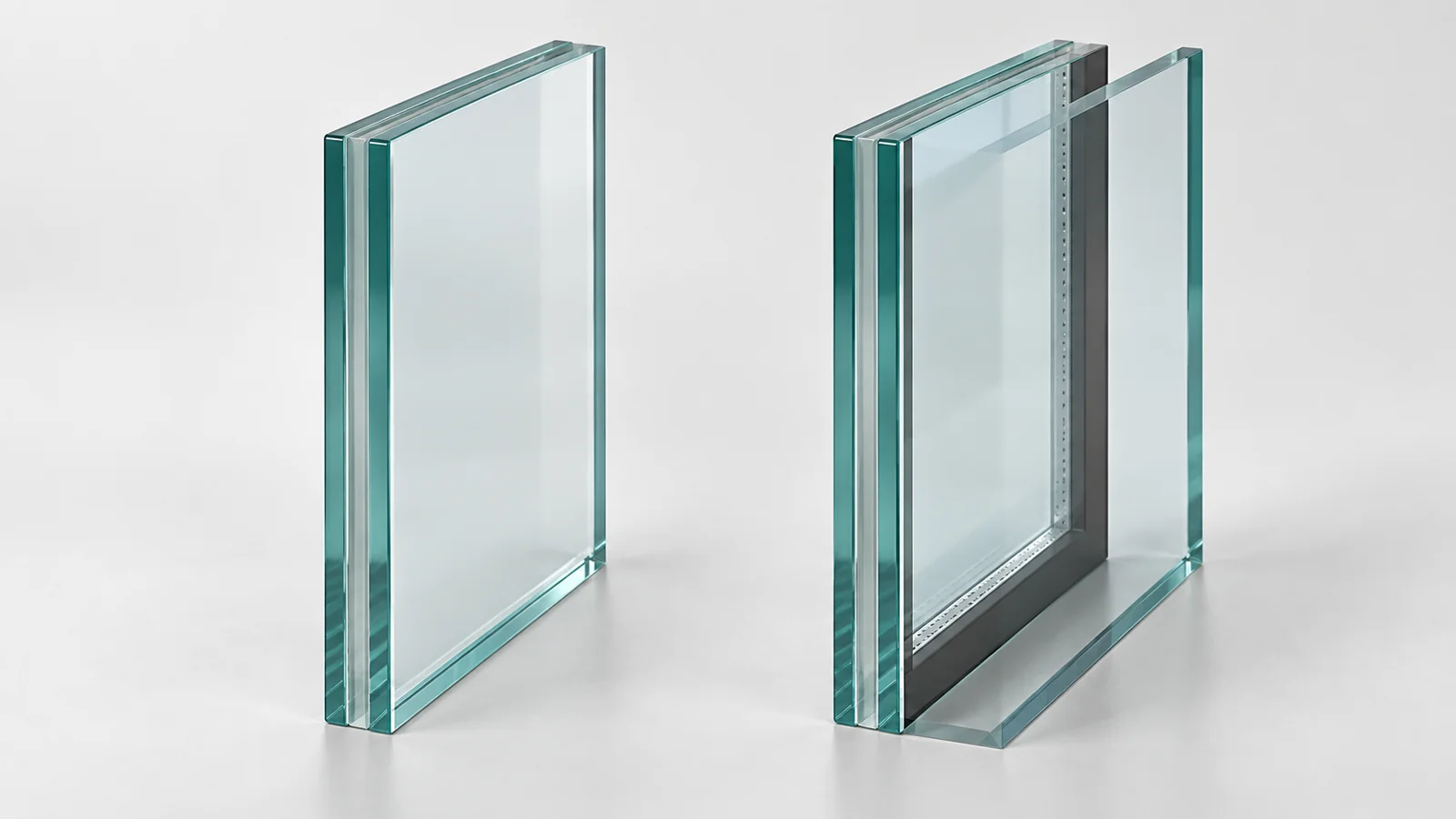
Single Laminated Impact Glass
A basic laminated impact assembly contains glass layers bonded to a strong polymer interlayer such as PVB or another approved interlayer.
Its primary job is impact retention: if the glass breaks, the interlayer helps keep the fragments together and helps prevent the opening from becoming completely exposed.
A single laminated assembly has no sealed insulating cavity.
That means it cannot experience traditional “condensation between panes” caused by failure of an IGU airspace seal.
If this type of laminated glass becomes milky, bubbly or cloudy inside the laminate itself, you may instead be looking at delamination or another glazing defect.
Insulated Laminated Impact Glass
An insulated impact window may combine the laminated impact lite with another glass lite separated by a spacer.
That creates a sealed insulating cavity.
It may also include:
- Low-E coatings;
- argon or another gas fill;
- warm-edge spacers;
- different glass thicknesses.
That cavity contributes to thermal performance, but it also introduces an IGU perimeter seal.
If that seal eventually allows excessive moisture into the cavity, fogging can develop.
What Actually Happens When an IGU Seal Fails?
An insulated glass unit is manufactured as a sealed system.
Around the edge of the unit, spacer and sealant materials maintain the cavity between the panes. Desiccant is commonly incorporated into the system to control small amounts of moisture.
Over time, if too much moisture passes through the edge seal, the desiccant can no longer keep the cavity sufficiently dry.
The result may progress from:
- occasional morning haze;
- visible droplets;
- repeated condensation;
- mineral staining or permanent cloudiness.
ASTM E2190 provides an industry framework for evaluating insulating-glass durability. Qualification includes dew/frost-point performance and the absence of fog after defined durability testing. ASTM E2190
A test standard, however, should not be interpreted as a guaranteed number of service years for every installed window.
Real-world installation, drainage, exposure and maintenance still matter.
Why Florida Is Particularly Tough on Window Seals
Seal failure is not unique to Florida, but several Florida conditions can increase stress on glazing systems.
Heat and Thermal Cycling
Imagine a west-facing impact window in August.
The exterior glass heats in strong afternoon sun while the interior of the home is kept cool by air conditioning.
Later, temperatures drop.
That repeated heating and cooling causes materials in the glass edge, spacer and frame to expand and contract.
Over thousands of cycles, aging components can experience additional stress.
High Humidity
Florida air can carry a large amount of moisture.
That does not mean humidity simply pours through a good IGU, but once a perimeter seal has deteriorated, a humid climate makes the resulting problem much more visible.
Moisture entering the cavity can condense as glass temperatures change.
UV Exposure
Window components in Florida receive intense sun exposure.
Long-term UV and thermal exposure are among the environmental stresses that glazing-edge materials must tolerate.
Coastal Salt
For homes close to the Atlantic or Gulf Coast, airborne salt adds another maintenance challenge.
Salt accumulation is particularly relevant around aluminum frames, hardware, drainage paths and glazing edges.
Foggy Glass or Salt Deposits? Do Not Confuse Them
Coastal homeowners should rule out another simple cause before declaring the IGU defective.
Salt spray, irrigation water and mineral deposits can leave a stubborn film on the exposed glass surface.
From several feet away, it can look surprisingly similar to internal haze.
The difference is accessibility.
If proper glass cleaning gradually removes it, you are dealing with contamination on the surface.
If the haze remains trapped between sealed panes, cleaning products cannot reach the problem.
Avoid aggressive abrasives or unapproved chemicals, especially on coated Low-E or specialty glazing.
Does a Foggy Impact Window Still Protect Against Hurricanes?
This question requires some care.
A failed insulating-glass seal and a failed impact-retention system are not automatically the same thing.
The impact function typically depends on the approved laminated glass assembly, frame, anchoring and complete tested window system.
Loss of an IGU cavity seal primarily affects things such as:
- visibility;
- insulating performance;
- gas retention;
- appearance.
However, you should not automatically certify a fogged window as hurricane-safe simply from visual inspection.
If there is also cracked glass, edge damage, frame distortion, corrosion, delamination or storm impact, the complete system should be evaluated.
First identify the impact-window system. For an approved Florida hurricane product, any replacement glazing should match the documented configuration required for that product rather than being treated as generic double-pane glass.
Can You Repair a Foggy Impact Window?
That depends on the product.
When condensation is actually trapped inside a failed IGU, wiping, household dehumidifiers and glass cleaner will not repair the sealed cavity.
Possible solutions can include:
Replacing the IGU
If the frame is sound and the manufacturer/product system permits glass-unit replacement, replacing the properly specified glazing assembly may be possible.
Replacing a Sash
Some operable systems may allow replacement of a complete glazed sash.
Replacing the Entire Window
This becomes more sensible when the window has multiple problems, such as:
- serious frame corrosion;
- storm damage;
- distorted profiles;
- leaking installation joints;
- obsolete components;
- several failed hardware parts;
- unavailable compatible glazing.

Be Careful With “Defogging” Shortcuts
For an ordinary residential IGU, you may encounter services that propose drilling small holes to remove moisture.
For an impact-rated window, modifying the glazing system raises a different concern.
The hurricane performance belongs to the tested and approved assembly, not simply to a piece of glass that looks similar.
Drilling, changing glass makeup or substituting an undocumented unit should therefore not be assumed to preserve the window’s original impact approval.
For Florida projects, verify the replacement configuration with the manufacturer, supplier, installer or applicable product documentation.
How Can You Reduce Future Fogging Problems?
No window can be guaranteed never to develop a failed seal, but careful specification and maintenance help.
Choose the Correct Glazing Construction
If thermal efficiency is important, discuss insulated laminated glazing and Low-E options rather than assuming all impact glass has identical energy performance.
Ask About IGU Testing
ASTM E2190 is one relevant standard for evaluating insulating-glass-unit durability. ASTM E2190
For energy claims, look for appropriate NFRC-certified performance data rather than relying only on marketing descriptions. ENERGY STAR notes that qualifying window products use independently tested and NFRC-certified energy-performance ratings. ENERGY STAR certified ratings
Keep Drainage Paths Clear
Do not let dirt, construction debris or sealant block designed drainage openings.
Clean Coastal Salt Deposits
Periodic fresh-water cleaning is especially important around frames and hardware in coastal environments.
Inspect Sealant and Weatherstripping
The perimeter installation around the window matters too.
Water around a frame does not necessarily mean the IGU itself has failed.
What Should You Ask When Ordering New Impact Windows?
Florida buyers should think beyond the word “impact.”
Ask your supplier:
What is the exact glazing makeup?
Is it single laminated glass or an insulated laminated IGU?
Is Low-E included?
Do not assume it is standard.
What are the actual U-Factor and SHGC values?
Use configuration-specific documentation where energy performance matters.
What IGU durability documentation is available?
Ask about the actual glazing configuration rather than accepting a generic factory statement.
Can a failed IGU be replaced without replacing the frame?
Knowing this before purchase can make future service much easier.
What warranty applies to seal failure?
Glass, frame, hardware, finish and insulated-glass seal warranties may have different terms.
RUTAO Impact Window Glazing Options
RUTAO manufactures customized aluminum windows and doors for residential and commercial projects, including impact-window configurations for coastal applications.
Discuss the available aluminum window configurations and obtain documentation for the exact glass, frame and installation supplied.
For U.S. projects, the glazing specification should be matched to the required structural, impact and energy-performance documentation for the actual window configuration.
That matters because a hurricane window is a complete system.
Glass, spacer, seal, frame, hardware, drainage, anchoring and installation all contribute to how the finished window performs over time.
Contact RUTAO with your project location, opening sizes and glazing requirements to discuss a suitable documented specification.
Frequently asked questions
Can single laminated impact glass develop IGU seal failure?
A single laminated lite has no sealed insulating cavity. Internal cloudiness may involve the laminate or another glazing problem. An insulated unit containing laminated glass does have a cavity and an edge seal that can fail.
Does fogging prove an impact window is no longer hurricane resistant?
No. Fogging alone does not establish impact performance. It also cannot confirm safety. Check the glazing construction and have damage, delamination or other deterioration assessed against the product documentation.
Can ordinary double-pane glass replace a foggy impact IGU?
Do not assume it can. Replacement glazing must be compatible with the documented impact-window assembly. Confirm the permitted glass makeup and service method with the manufacturer or a qualified professional.
Will cleaning fix fog inside a sealed impact-glass cavity?
Cleaning accessible surfaces can remove deposits or surface moisture. It cannot reach moisture inside a sealed cavity or repair an internal laminate defect. First identify the location of the haze.
Should foggy impact glass be drilled to release moisture?
Do not assume drilling preserves the documented window performance. Discuss an approved glazing, sash or window replacement with the manufacturer or qualified service provider.