Florida’s 25% rule for replacement windows is an opening-protection exception for certain existing dwellings. It is not a blanket permission to install unprotected windows anywhere in the state.
The calculation uses glazed-opening area, not the number of windows, and considers replacements within any 12-month period. Eligibility also depends on the building’s original code, its type and location, and the provision governing the permit.
This guide explains the area calculation and the questions to settle before ordering. It distinguishes current local guidance for the 8th Edition from documents developed for the forthcoming 9th Edition; a proposal alone does not establish the final rule for your project.
What Is Florida’s 25% Window Rule?
When homeowners hear “25% rule,” they often imagine this:
My house has 20 windows, so I can replace five without impact protection.
That is not a reliable interpretation.
The City of Seminole opening-protection exception form refers to the aggregate area of glazed openings in the dwelling or dwelling unit. Source
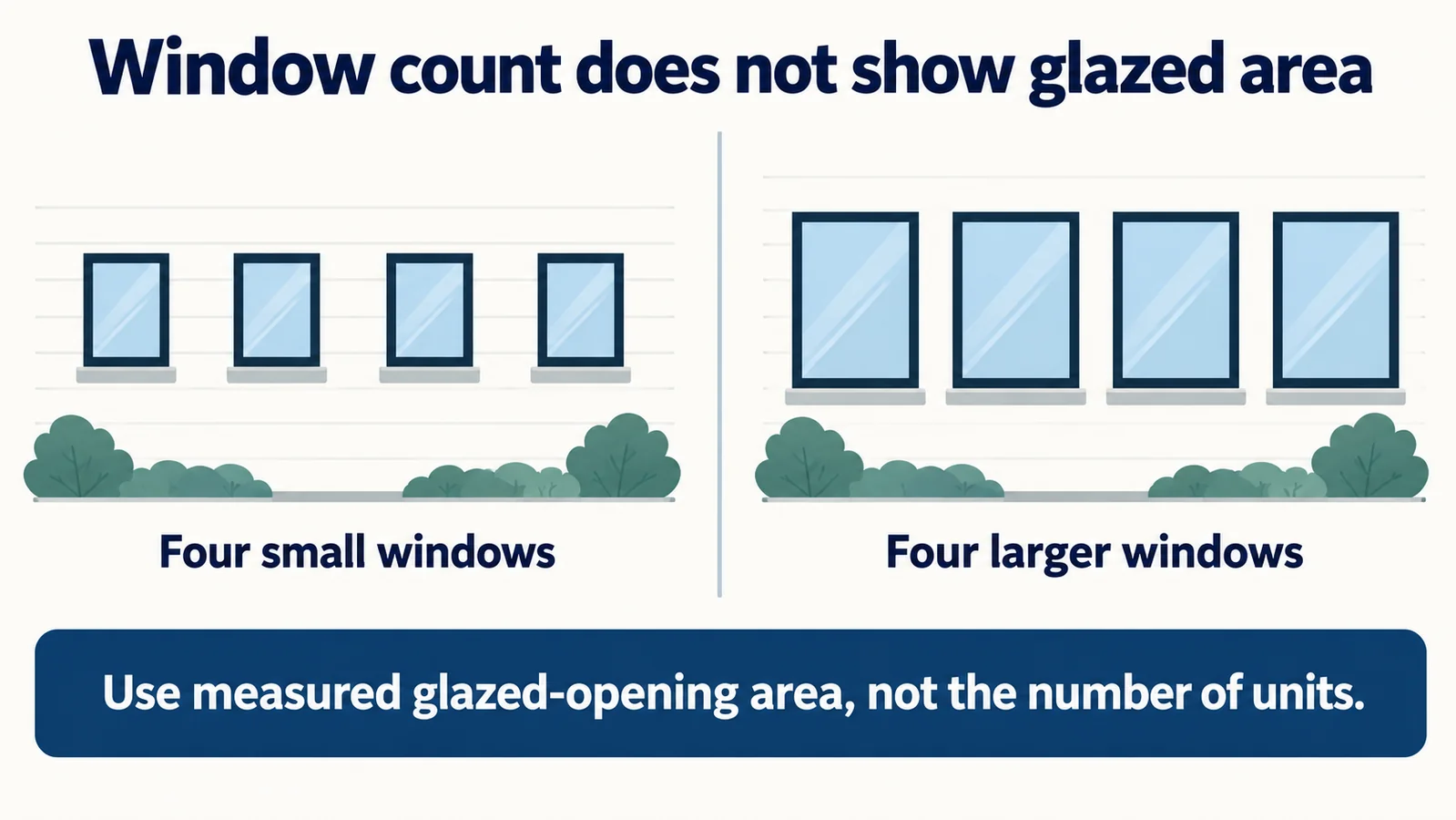
The operative word is area.
Suppose a house has:
- twelve small bedroom windows;
- four medium casement windows;
- two large picture windows;
- one wide sliding glass door.
Those openings are not equal.
One sliding glass door could contain more glazing than several small windows combined.
So simply dividing the number of windows by four can produce the wrong answer.
Think in Square Feet, Not Window Count
A more useful first calculation is:
Glazed area being replaced ÷ total glazed-opening area
That gives you a much better starting point for discussing the threshold with your contractor or building department.
It is still not the final code determination, but it avoids one of the most common misunderstandings.
Which Existing Homes Can Use the Exception?
The current Charlotte County guidance for Section 707.4, Exception 1 limits that exception to existing one- and two-family dwellings constructed under codes other than the Florida Building Code. The county uses original permits predating March 2002 to establish that condition.
Its guidance also excludes commercial projects, new openings, altered glazed-opening sizes and adding glass to a formerly solid door. These are the county’s published review instructions; confirm the applicable provision and submission requirements where your property is located.
A condo owner should not assume this particular one- and two-family exception applies to a condominium unit. Similarly, an older-looking house is not evidence of the original permit date. Find the permit history before treating an area calculation as an exemption.
The City of Seminole form separately states the 12-month and area conditions and requires wind-pressure design for enclosed buildings. A result below 25% satisfies only the arithmetic part of that documented exception.
What Is a Wind-Borne Debris Region?
The 25% question cannot be separated from WBDR — Wind-Borne Debris Region.
In a WBDR, exterior glazed openings can be subject to hurricane-debris protection requirements.
Depending on the applicable code and project, compliant protection can involve:
- impact-resistant windows;
- impact-resistant doors;
- approved hurricane shutters;
- another approved opening-protection system.
Impact windows are therefore not automatically the only solution. PNNL opening-protection guidance describes impact-rated glazing and protective coverings; the permitting authority must accept the system for the actual opening.
The cited municipal instructions illustrate that opening-protection requirements depend on location and project conditions rather than a blanket statewide rule. Source Source
HVHZ projects require review of their own applicable provisions. Do not assume a municipal exception discussed here determines an HVHZ project.
What Should You Check for the 9th Edition?
ICC lists December 31, 2026 as the effective date for the 9th Edition Florida Building Code, Existing Building.
A replacement-window comment submitted during code development discusses existing exceptions and another proposed location-based exception. The document explicitly requests modifications. It should not be treated by itself as proof that every proposed provision appears unchanged in the adopted code.
For work governed by the new edition, ask the permitting authority to identify the final applicable section and any local requirements. This article does not establish new wind-region boundaries or promise a future exemption. For broader planning, see RUTAO’s 9th Edition impact-window guide.
Does Permit Timing Matter?
Yes.
A code transition is not simply based on the day workers arrive at your house.
The Florida Building Code edition applicable to a permitted project is tied to the permit process.
Ask the local building department: Which code edition and exception will govern this permit application?
Do that before ordering custom windows, particularly near the December 31 transition. The date you request a quotation or the day workers arrive does not settle the applicable permit requirements.
How Do You Calculate 25%?
Start with the glazed openings.
Imagine a simplified house with:
| Opening | Glazed Area |
|---|---|
| Bedroom windows | 60 sq. ft. |
| Living-room windows | 50 sq. ft. |
| Kitchen windows | 20 sq. ft. |
| Sliding glass doors | 70 sq. ft. |
| Total | 200 sq. ft. |
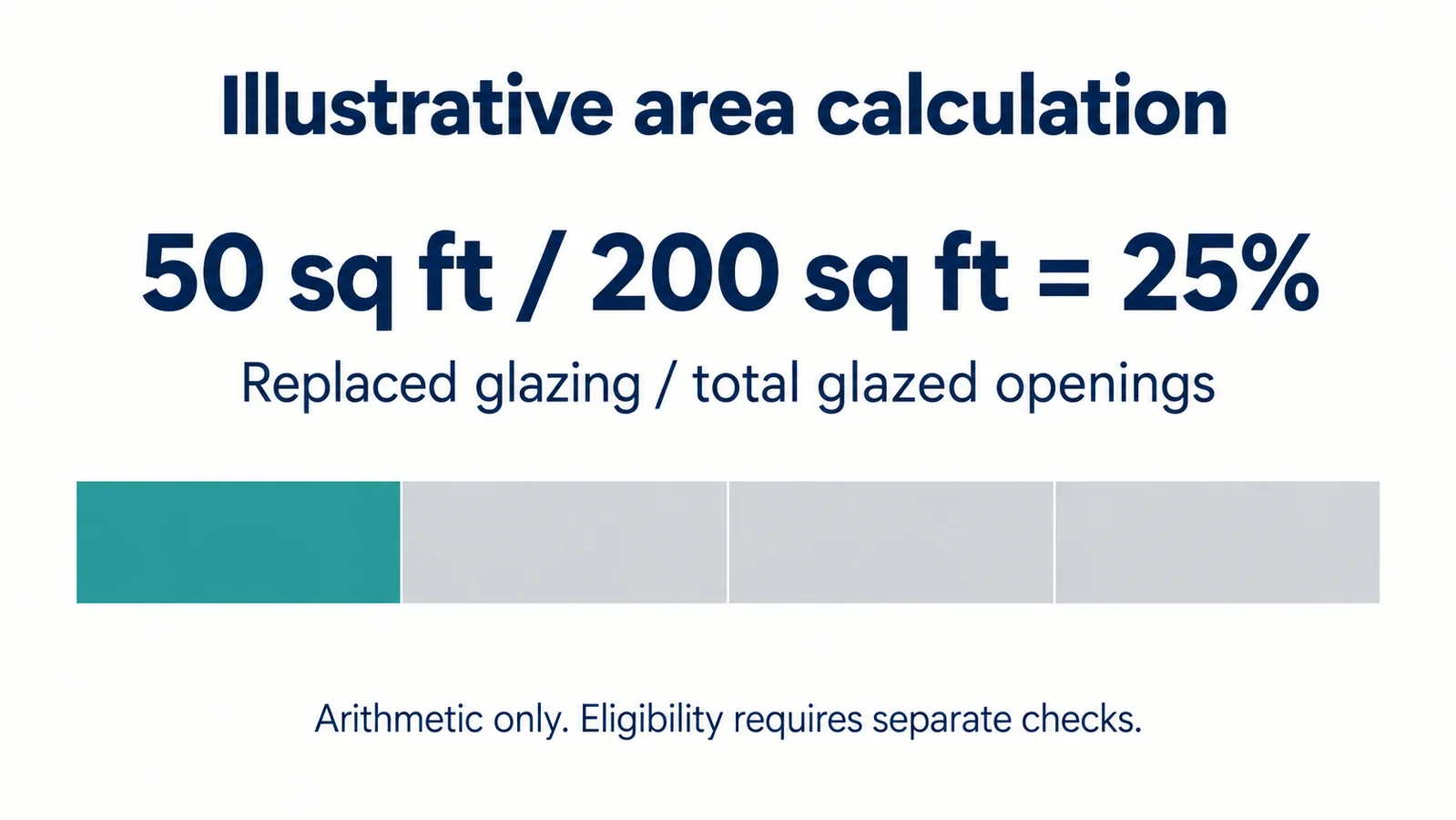
Twenty-five percent of 200 sq. ft. is:
50 sq. ft.
Now suppose the homeowner wants to replace four windows totaling 42 sq. ft.
That is:
42 ÷ 200 = 21%
Replacing a different four windows totaling 65 sq. ft. would equal:
32.5%
Same number of windows.
Completely different glazed-area percentage.
This example is only a calculation illustration; it does not determine whether a real project qualifies for an exception.
Does the 25% Rule Mean the New Windows Can Be Weak?
No.
This is an important distinction.
An exception from a specific opening-protection requirement does not mean a replacement window can ignore all Florida performance requirements.
Replacement products may still need to satisfy applicable requirements for matters such as:
- structural wind pressure;
- water resistance;
- installation;
- anchorage;
- energy performance;
- safety glazing;
- product approval;
- permitting.
Impact resistance and structural design pressure are related but separate concepts.
A window can have a structural pressure rating without being an impact-resistant system.
RUTAO’s existing guide to impact-window design pressure explains why required positive and negative pressure ratings depend on the actual opening and building rather than one universal “Florida DP” number.
What If My Existing Windows Are Already Impact Rated?
Do not judge them by appearance.
A thick pane, dark glass, heavy aluminum frame or double glazing does not prove that the complete assembly is impact resistant.
Look for:
- manufacturer;
- product series;
- permanent identification;
- Florida Product Approval;
- Miami-Dade NOA where applicable;
- permit records;
- installation documentation.
RUTAO’s guide on identifying impact-resistant windows provides a seven-step verification process and emphasizes matching the installed assembly to its approval documentation.
Knowing what is already installed can change the replacement strategy.
What About Sliding Glass Doors?
Do not forget them when calculating glazed area.
Large sliding doors can represent a substantial percentage of a home’s total exterior glazing.
This is where counting “windows” becomes especially misleading.
A homeowner may replace only one sliding door but alter far more glazing area than another homeowner replacing four small windows.
Create an opening schedule that includes:
- fixed windows;
- operable windows;
- sliding glass doors;
- glazed exterior doors;
- other applicable glazed openings.
Then record the dimensions.
Should You Replace Windows in Phases?
Phased replacement can make sense when budget or construction sequencing requires it.
But do not divide the project into phases solely because someone told you “five windows per year keeps you below 25%.”
The threshold is not simply a window count.
Before ordering, ask:
What is the total glazed-opening area?
Measure the relevant openings rather than counting units.
What area is being replaced?
Use actual dimensions.
Is the property in a WBDR or HVHZ?
Location changes the analysis.
What work occurred during the preceding 12 months?
The Seminole form uses any 12-month period. January does not automatically reset the calculation. Give the reviewer prior permit and replacement records and ask how the relevant work is aggregated; do not assume separate contracts create separate exemptions.
Which code edition applies?
This is especially important for projects around December 31, 2026.
Does the local building department agree?
The authority reviewing the permit is more important than an online rule-of-thumb.
What Documentation Should You Give the Window Supplier?
Once the project requirements are clear, send the supplier more than a list saying:
10 hurricane windows.
A useful window schedule includes:
- opening number;
- width;
- height;
- operating style;
- required impact status;
- required positive design pressure;
- required negative design pressure;
- glass configuration;
- frame finish;
- applicable approval requirement.
For custom aluminum windows, exact size matters because pressure ratings and approved configurations can change with dimensions.
RUTAO’s Approach to Florida Replacement Projects
RUTAO manufactures custom aluminum doors and windows for residential and commercial projects. Its aluminum impact awning window range provides one starting point for discussing an opening schedule, subject to verification of the supplied configuration and project documentation.
Available customization can include:
- exact dimensions;
- aluminum profile;
- laminated glazing;
- insulated glazing;
- Low-E coatings;
- frame color;
- hardware;
- opening style.
For Florida replacement projects, however, customization should start after the project requirements are established.
The recommended sequence is:
measure openings → determine project/code requirements → establish impact and DP criteria → select the documented window configuration → prepare drawings → manufacture.
A supplier should not tell a Florida homeowner that every replacement automatically requires impact glass.
It also should not promise that staying below a simple window count automatically creates an exemption.
The project needs to be evaluated against the actual applicable requirements.
Before You Order
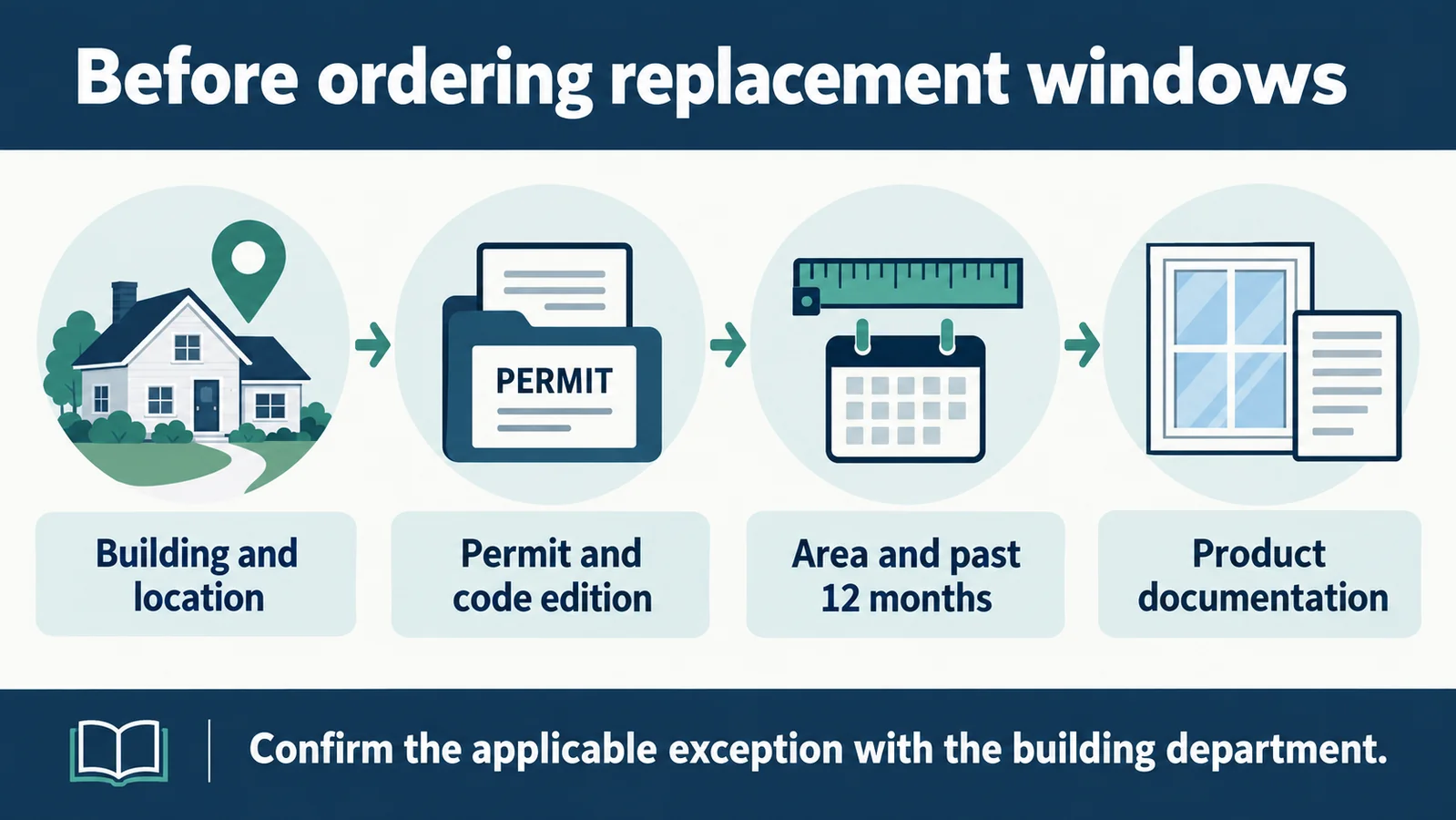
Confirm the building type, original permit/code, location, applicable exception, area calculation and relevant 12-month work history. A 25% figure is only one part of that review.
Keep the approved opening schedule with the product documents. It is easier to adjust a specification on paper than to discover during review that products already being manufactured do not match the project.
Send RUTAO your opening schedule and project requirements for a configuration discussion after the code requirements are established.
Frequently Asked Questions
Is Florida's 25% rule based on the number of windows?
No. The cited opening-protection exception uses aggregate glazed-opening area and replacements within any 12-month period. Counting windows alone does not establish eligibility.
Does replacing more than 25% automatically mean every window in my Florida home must be impact rated?
Exceeding the area limit means this particular exception cannot be relied on. It does not, by itself, establish that every untouched window must be replaced. The permit reviewer must determine the protection required for the actual project.
Are impact windows required everywhere in Florida?
No. Opening-protection requirements depend on location and project conditions. Some projects can also use approved hurricane-protection systems rather than impact glazing.
When does the 9th Edition Florida Building Code take effect?
The 9th Edition (2026) Florida Building Code is scheduled to take effect December 31, 2026.
Should sliding glass doors be included when evaluating glazed-opening area?
Applicable glazed doors can represent a large portion of the total exterior glazing. Do not assume the calculation involves conventional windows only.
Does an opening-protection exception mean a replacement window has no code requirements?
No. Other requirements can still apply, including structural pressure, installation, safety glazing, energy performance, permitting and applicable product documentation.